
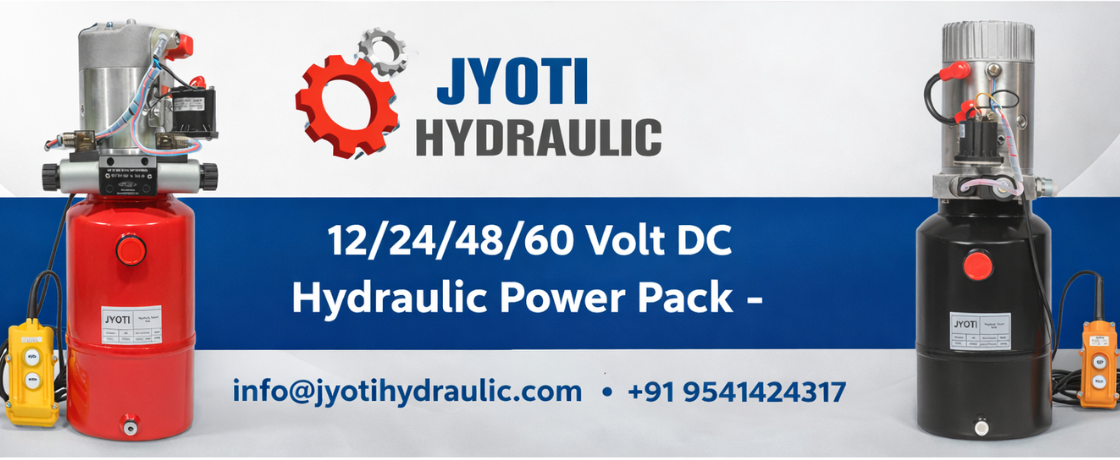
Jyoti Hydraulic provides purpose-built hydraulic power packs for industrial machines, lifting systems, presses, clamping fixtures and automation equipment. While comparing a 3 HP or 5 HP unit, buyers should look beyond the initial price. Motor capacity, pump flow, working pressure, reservoir size, duty cycle and valve configuration determine whether a power pack will perform reliably or suffer from slow operation, overheating and frequent breakdowns.
Hydraulic Power Pack Industry in India
The demand for compact hydraulic power units is increasing across manufacturing, automotive, fabrication, packaging, construction and material-handling industries. Indian manufacturers are replacing oversized conventional systems with compact, application-specific power packs that consume less energy and occupy less floor space.
Reliable 3 HP Hydraulic Power Pack Manufacturers now focus on complete system engineering rather than simply assembling a motor, pump and tank. The unit must generate sufficient force, maintain the required cylinder speed and handle the machine’s actual working cycle without excessive heat generation.
How Do 3 HP and 5 HP Power Packs Differ?
A 3 HP hydraulic power pack is generally suitable for light to medium-duty applications such as small presses, hydraulic clamps, lifting tables, maintenance equipment and compact special-purpose machines.
A 5 HP model is preferred when the equipment requires higher oil flow, faster cylinder movement, longer operating cycles or increased load-handling capacity. However, horsepower alone cannot determine performance. A properly designed 3 HP system may perform better than an incorrectly configured 5 HP unit.
Important technical factors include:
- Working pressure: Determines the force produced by the hydraulic cylinder.
- Flow rate: Controls cylinder movement speed and machine cycle time.
- Pump type: Gear pumps are economical and durable, while vane and piston pumps support quieter or high-pressure applications.
- Reservoir capacity: Adequate oil volume helps control temperature and prevents aeration.
- Valve circuit: Relief, directional, flow-control and counterbalance valves regulate safe operation.
- Filtration: Clean hydraulic oil extends the life of pumps, seals and valves.
Industrial Applications
Three HP and five HP hydraulic power packs are commonly used with:
- Hydraulic presses and punching machines
- Scissor lifts and loading platforms
- Bending and forming machines
- Industrial clamping fixtures
- Die-changing systems
- Material-handling equipment
- Hydraulic testing rigs
- Packaging and automation machinery
- Special-purpose machines
A correctly sized unit provides stable pressure, repeatable machine movement and smoother operation. It also reduces power consumption, oil leakage, maintenance requirements and unplanned production downtime.
Factors Affecting Hydraulic Power Pack Price
The 5 HP Hydraulic Power Pack Price varies because every application has different technical requirements. A basic manually operated unit will cost less than an automated system equipped with solenoid valves, PLC controls, sensors and an oil cooler.
Major price factors include motor brand, pump displacement, pressure rating, flow capacity, oil tank size, number of valves, filtration level, electrical panel, hose and fitting requirements, cooling arrangement and mounting design.
Buyers should compare quotations using complete specifications. A cheaper power pack with an undersized tank or low-quality components may overheat, lose pressure and require frequent repairs, increasing its total ownership cost.
How to Select the Right Power Pack
Before requesting a quotation, share the required load, cylinder bore and stroke, operating pressure, desired movement speed, cycles per hour and daily working duration. Also confirm whether the machine requires single-acting or double-acting operation.
For continuous-duty equipment, ask about oil cooling, reservoir sizing and motor duty rating. Confirm component availability, warranty, spare parts and after-sales technical support. These details help the manufacturer design a system that matches the machine instead of offering a standard unit with unsuitable performance.
Future of Hydraulic Power Packs
Modern power packs are becoming more energy-efficient and automation-ready. Variable-frequency drives, digital pressure sensors, temperature monitoring and PLC-based controls help reduce power consumption and detect faults early. Compact manifold designs are also reducing leakage points and installation space.
Conclusion
The right hydraulic power pack should be selected through pressure, flow, force and duty-cycle calculations—not horsepower alone. Experienced 3 HP Hydraulic Power Pack Manufacturers can recommend a technically balanced system, while an accurate 5 HP quotation should reflect the complete application and control requirements.
Frequently Asked Questions
What determines hydraulic cylinder speed?
Cylinder speed mainly depends on pump flow rate and cylinder area. Higher flow generally produces faster movement.
Why does a hydraulic power pack overheat?
Common causes include an undersized reservoir, continuous relief-valve operation, clogged filters, incorrect oil viscosity or inadequate cooling.
Can a 3 HP or 5 HP unit be customised?
Yes. Pressure, flow, reservoir, valves, controls and mounting can be designed according to the machine.
How can I receive an accurate quotation?
Provide application load, pressure, flow, cylinder details, operating cycle and control requirements.
Request a Quotation
Contact Jyoti Hydraulic for a customised quotation and expert consultation for your hydraulic application.
📧 info@jyotihydraulic.com
📞 +91 9541424317


