
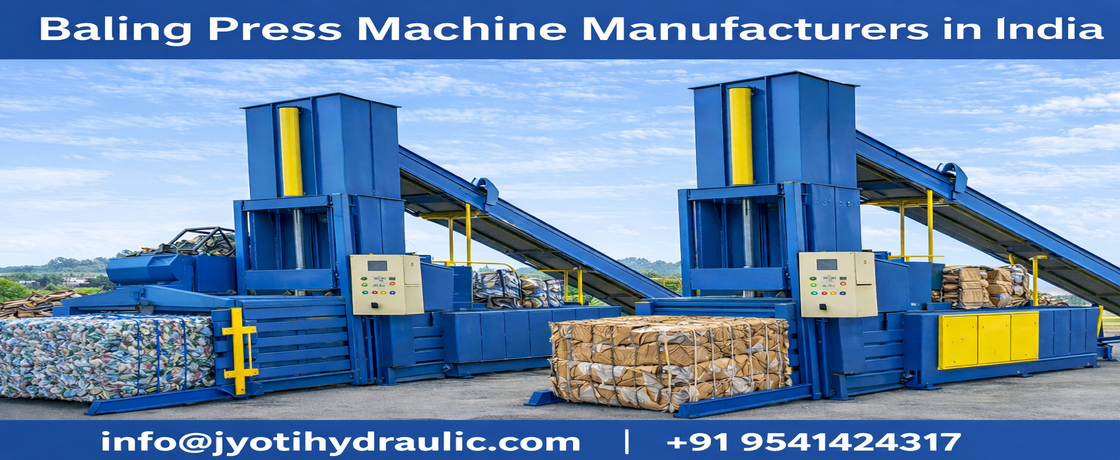
Jyoti Hydraulic stands at the center of a growing industrial need: turning loose, bulky, low-density can scrap into compact, high-value, logistics-friendly bales that industries can store, move, and monetize efficiently. Across recycling yards, beverage plants, scrap collection centers, FMCG units, and waste management facilities, aluminium, beer, and cold drink cans create a deceptively expensive problem. At first glance, they look lightweight and harmless. In reality, loose cans consume massive floor space, increase handling time, raise transport costs, reduce warehouse efficiency, and create avoidable safety and compliance issues. This is exactly where a high-performance can baling machine becomes not just useful, but operationally essential.
As industrial waste volumes rise and margins tighten, companies can no longer afford outdated scrap handling methods. Every square foot of storage matters. Every labor hour matters. Every truckload matters. And every kilogram of recoverable scrap matters. A modern can baler transforms this challenge into a measurable advantage by compressing aluminium beverage cans into dense, uniform bales that are easy to stack, transport, and sell. For businesses looking for an Aluminium Can Baler Machine Manufacturer, Cold Drink Can Baling Machine Manufacturer, Beer Can Baling Machine Manufacturer, or trusted Baling Machine Manufacturers in India, the right equipment decision can dramatically improve productivity, cleanliness, compliance, and profitability.
This guide explains the industrial reality behind can scrap handling, the working principle of can baling systems, the types of machines available, key buying considerations, return on investment, and how to choose the right manufacturing partner for long-term operational success.
1. Introduction: Why Can Baling Has Become an Industrial Necessity
Can waste is no longer a minor housekeeping issue. In industries where aluminium beverage cans, beer cans, and cold drink cans accumulate daily, unmanaged scrap quickly becomes a serious operational burden. Loose cans occupy an enormous amount of volume relative to their weight. This leads to overcrowded scrap yards, blocked movement zones, inefficient loading operations, and rising labor dependence.
Many facilities still treat can scrap as a secondary issue, only to discover that it silently affects plant efficiency in multiple ways. Forklift routes become congested. Workers spend extra hours bagging or manually shifting materials. Trucks leave underloaded because loose cans do not utilize transport capacity properly. Recyclers offer lower rates when scrap is mixed, contaminated, or badly handled. What begins as “just scrap” becomes a recurring drain on time, space, and money.
A can baling machine solves this by converting scattered, irregular cans into compact bales with higher density and better resale value. Instead of managing a mess, businesses manage a system. Instead of paying for inefficiency, they profit from organized scrap recovery.
2. Industrial Problem Landscape
Increasing Aluminium and Beverage Can Waste
The beverage industry has expanded rapidly, and with it comes a huge increase in post-production rejects, damaged inventory, used packaging, and collection-based scrap. Aluminium cans are widely preferred because they are lightweight, recyclable, corrosion-resistant, and easy to print and brand. But their biggest advantage in packaging becomes a major drawback in scrap handling: they occupy a large volume when empty.
A plant may generate hundreds of kilograms of can scrap in a shift, yet those cans can fill an impractical amount of floor space. Without compression, even a modest quantity becomes a major storage headache.
Storage Congestion in Factories
Loose cans are among the most space-inefficient forms of industrial scrap. They pile up quickly, scatter easily, and often require dedicated segregation zones just to prevent operational disruption. In smaller factories and busy recycling facilities, this causes:
-
blocked aisles and unsafe walkways
-
reduced storage capacity for valuable raw materials
-
poor scrap segregation
-
slower internal movement of goods and equipment
When space is already expensive, storing air-filled cans is not an efficient business decision.
Rising Transportation Costs
Transporting loose cans is economically wasteful. A truck or pickup loaded with uncompressed cans reaches volume capacity long before reaching weight capacity. That means businesses pay for trips that carry mostly air. This leads to more frequent dispatches, higher fuel expenses, more loading labor, and increased coordination complexity.
Baling changes the economics of transportation by increasing density. More material fits into each trip, lowering the cost per kilogram transported.
Labor-Intensive Handling Processes
Without a baling system, workers must manually collect, bag, stack, sort, and move cans. This not only consumes time, but also introduces inconsistency. Manual handling is slow, messy, and physically inefficient. It also creates opportunities for contamination, inventory loss, and workplace injuries.
Environmental Pressure and Compliance
Modern businesses face growing pressure to improve waste handling and sustainability practices. Unmanaged scrap affects cleanliness, audit readiness, and environmental responsibility. Companies that adopt organized scrap management systems are better positioned for regulatory compliance, customer trust, and sustainability reporting.
3. What Is a Can Baling Machine?
A can baling machine is an industrial hydraulic compression system designed to compact loose metal beverage cans into tightly packed bales for easy storage, transportation, and recycling. From an industrial perspective, it is not merely a scrap compressor; it is a material-density optimization system.
These machines are typically used for:
-
aluminium cans
-
beer cans
-
cold drink cans
-
soft drink packaging scrap
-
post-consumer beverage can waste
-
rejected packaging stock from beverage plants
The primary role of a can baler is to reduce the volume of scrap while improving handling efficiency and scrap market value.
Machine Classification
Can baling machines can be classified based on their design and level of automation:
-
vertical baling machines
-
horizontal baling machines
-
manual tie balers
-
semi-automatic balers
-
fully automatic hydraulic balers
The ideal choice depends on can volume, plant layout, labor availability, desired bale output, and investment goals.
4. Technical Working Principle of a Can Baling Machine
To understand the value of a can baling machine, it helps to understand how it works at the mechanical level.
Hydraulic Compression System
At the core of the machine is a hydraulic power pack. This system uses hydraulic oil, pumps, valves, and cylinders to generate controlled compression force. The principle is simple but powerful: hydraulic pressure drives a ram or platen that pushes down or sideways against loose cans inside a chamber.
Because cans are hollow and highly compressible, they respond extremely well to hydraulic baling. Large volumes can be compressed into dense units within a short cycle time.
Pressure Mechanism
Once the cans are fed into the chamber, hydraulic pressure is applied through a moving platen. The compression force reduces void space between cans and crushes them into a compact mass. The machine is designed to maintain pressure long enough to stabilize the shape and density of the bale.
The effectiveness of this stage depends on:
-
cylinder force
-
chamber design
-
compression stroke length
-
feed consistency
-
material type and moisture condition
Bale Formation Process
After compression, the compacted material is tied using metal wire, plastic strapping, or other bale-binding methods depending on the machine configuration. The tied bale is then ejected manually or automatically.
A properly formed bale offers key advantages:
-
uniform dimensions
-
easy stacking
-
efficient loading
-
reduced material loss
-
higher acceptance by recyclers
Automation vs Semi-Automation
In semi-automatic machines, operators load the cans, initiate the cycle, and tie or eject the bale with some manual assistance. In fully automatic systems, feeding, compressing, tying, and ejection are integrated for faster and more consistent performance.
Semi-automatic systems are suitable for moderate scrap generation and cost-conscious buyers. Fully automatic systems suit high-throughput plants where speed, consistency, and labor reduction are priorities.
Key Components of a Can Baler
A typical can baling machine includes:
-
hydraulic cylinder
-
compression chamber
-
power pack
-
control panel
-
ram or platen
-
bale tying arrangement
-
ejection system
-
feed opening or hopper
-
structural frame
Each component directly affects machine durability, pressure efficiency, and long-term maintenance costs.
5. Types of Can Baling Machines
Aluminium Can Baler Machine
An aluminium can baler is specifically designed for lightweight, high-volume aluminium scrap. Since aluminium cans are common in beverage, packaging, and recycling industries, these machines are often optimized for fast cycle times and efficient densification.
A reliable Aluminium Can Baler Machine Manufacturer focuses on chamber design, compression strength, and bale density so that users can maximize transport efficiency and resale value.
Cold Drink Can Baling Machine
Cold drink can balers are widely used in soft drink bottling plants, packaging centers, event waste recovery operations, and municipal collection systems. These machines often handle mixed-condition cans, including slightly deformed, labeled, or collection-grade beverage containers.
A trusted Cold Drink Can Baling Machine Manufacturer understands the need for stable compression, easy feeding, and practical maintenance under real industrial conditions.
Beer Can Baling Machine
Beer can balers are commonly used in breweries, beverage distributors, hospitality waste consolidation centers, and recycling yards. Beer can scrap may include line rejects, dented stock, post-event recovery, and returned packaging waste.
A dependable Beer Can Baling Machine Manufacturer offers machines that can handle regular high-volume scrap generation without frequent downtime.
Horizontal vs Vertical Balers
Vertical Balers
These are space-saving machines where compression occurs vertically. They are suitable for medium-scale operations with lower floor-space availability. They are often preferred by smaller scrap yards, warehouses, and moderate-volume beverage units.
Horizontal Balers
These are designed for higher throughput and often support semi-automatic or automatic feeding. They are ideal for large recycling plants and industrial units with continuous scrap generation. Horizontal balers usually deliver faster operation and larger bale output.
6. Key Industrial Applications
Recycling Plants
Recycling operations depend heavily on efficient material densification. Loose cans are difficult to sort, store, and transport economically. A can baler helps recyclers streamline inbound scrap handling and improve resale logistics.
Beverage Manufacturing Units
Production rejects, line damage, packing defects, and dented cans are common in beverage plants. Instead of storing these materials loosely, balers convert them into saleable bales and free up valuable floor space.
Scrap Yards
Scrap yards deal with irregular and fluctuating volumes of metal waste. A can baling machine helps standardize output, reduce clutter, and improve dispatch efficiency.
Waste Management Companies
Companies handling municipal, commercial, or event-based recyclable waste can significantly improve efficiency through baling. It makes collection centers cleaner and downstream movement more economical.
FMCG Industries
Large FMCG operations handling packaged beverages or promotional inventory often generate packaging waste. Baling these materials supports organized recycling and better warehouse discipline.
7. Major Benefits of a Can Baling Machine
Space Optimization
This is often the first and most visible benefit. A baler can reduce the storage volume of loose cans dramatically. What once occupied a large area can be stacked neatly in compact bales. This frees space for productive operations.
Reduced Transportation Cost
Compressed bales allow more scrap to be loaded into each vehicle. Fewer trips are needed, and each trip becomes more cost-effective. Over time, this single benefit can justify a significant portion of the machine investment.
Improved Scrap Value
Well-compacted, segregated, uniform bales are more attractive to recyclers than loose, contaminated, or badly handled material. Better presentation often supports stronger negotiation and better recovery value.
Labor Cost Reduction
Manual scrap handling is repetitive and inefficient. Baling reduces the time required for collection, sorting, stacking, and loading. The result is lower labor dependence and better redeployment of manpower.
Cleaner and Safer Workspace
Loose cans create clutter, tripping hazards, and operational disorder. A baling machine supports a cleaner and more professional facility environment.
Environmental Sustainability
A can baler helps businesses participate more effectively in recycling systems. Better material recovery means less waste, improved resource utilization, and stronger sustainability performance.
8. Cost vs Value Analysis: Why a Can Baler Pays Back
Many buyers focus first on the machine price. Experienced operators focus on the total cost of inefficient scrap handling.
Initial Investment vs Long-Term Savings
A can baling machine is a capital investment, but the real evaluation should include:
-
storage savings
-
reduced transport frequency
-
lower labor cost
-
better scrap recovery price
-
improved site organization
-
fewer operational disruptions
When looked at this way, the machine is not just an expense. It is a cost-control and value-recovery asset.
ROI in Practical Terms
Return on investment comes from multiple channels working together. A facility that previously needed several scrap clearances per week may cut dispatch frequency significantly. A business using multiple workers for scrap shifting may reduce manual involvement. A recycler may secure better pricing due to improved bale density and uniformity.
The ROI is especially strong in facilities where can scrap is generated daily and in meaningful volumes.
Efficiency Improvements
Efficiency is not only about faster compression. It includes smoother housekeeping, easier inventory management, better floor utilization, faster truck loading, and less chaos in scrap zones.
Profitability Enhancement
Once scrap becomes organized, measurable, and marketable, it stops being a burden and starts behaving like a recoverable revenue stream. That transformation is one of the strongest financial arguments for investing in a can baling machine.
9. Expert Buying Guide: How to Choose the Right Can Baling Machine
Selecting the right machine is not only about tonnage or price. It requires operational understanding.
Production Capacity
Estimate how much can scrap is generated per day or per shift. Buying an undersized machine creates backlog and operator frustration. Buying an oversized system may increase unnecessary capital cost.
Bale Size and Weight
The bale should match your storage method, truck loading pattern, and recycler preference. Compact and uniform bale dimensions improve downstream efficiency.
Automation Level
Choose manual, semi-automatic, or automatic depending on your throughput, labor cost, and process discipline. High-volume operations benefit more from automation.
Power Consumption
Energy efficiency matters over the long run. An intelligently designed hydraulic system can deliver strong performance without excessive power waste.
Machine Durability
Can balers operate in harsh industrial environments. Structural strength, cylinder quality, hydraulic system reliability, and fabrication standards are critical. Low-cost machines often become expensive through breakdowns and maintenance.
After-Sales Service
Service support is not optional. Spare availability, technical guidance, installation support, and troubleshooting responsiveness have a direct impact on uptime.
Manufacturer Credibility
A credible manufacturer understands the application, not just the machine. They should be able to guide you on chamber size, pressure range, automation suitability, installation planning, and long-term maintenance.
For buyers searching for Baling Machine Manufacturers in India, this point is especially important. The right manufacturer offers more than supply; they offer engineering-backed consultation.
10. Why Choosing the Right Manufacturer Matters
A baling machine may look similar on the surface, but engineering quality varies widely. The wrong supplier can leave buyers with weak structure, inconsistent bale density, hydraulic leakage, high downtime, poor service, and short equipment life.
Importance of Quality Engineering
High-grade steel structure, properly sized hydraulic cylinders, quality seals, robust welding, efficient power packs, and reliable control systems determine long-term performance. Good engineering reduces vibration, leakage, breakdown, and operating frustration.
Customization Options
Not every facility has the same scrap profile or layout. Some need compact vertical systems. Others need higher throughput horizontal machines. Some require special chamber sizes, enhanced safety features, or integration with conveyors. A capable manufacturer should be able to tailor the solution.
Long-Term Support
Industrial machinery is a long-term asset. Buyers need spare support, maintenance advice, troubleshooting assistance, and honest technical service. The best manufacturers build confidence beyond the sale.
Role of Indian Manufacturers
Strong Baling Machine Manufacturers in India play a crucial role in delivering application-specific, cost-effective, and service-accessible machinery to domestic industries. Indian manufacturers with solid hydraulic engineering expertise can provide durable solutions suited to local industrial conditions, operating economics, and service expectations.
11. Future Trends in Baling Technology
The future of can baling is moving toward smarter, cleaner, and more connected systems.
Automation and Smart Machines
More facilities are adopting machines with programmable cycle control, auto-ejection, reduced operator dependency, and productivity-enhancing automation features.
IoT Integration
Advanced baling systems are increasingly moving toward performance monitoring through sensors and connected systems. This may help users track cycle count, pressure consistency, maintenance schedules, and uptime trends.
Energy-Efficient Systems
Modern hydraulic design is placing stronger emphasis on lower energy consumption without compromising compression efficiency. This becomes especially important in large-scale continuous operations.
Sustainable Waste Management Trends
As environmental accountability grows, organized recyclables handling will become a stronger requirement rather than just a best practice. Machines that help businesses recover material efficiently will play an even bigger strategic role.
12. Conclusion: A Strategic Industrial Investment, Not Just a Scrap Machine
Can scrap management is no longer a background issue that businesses can ignore. Loose aluminium, beer, and cold drink cans consume space, increase labor, reduce transport efficiency, and quietly erode operational margins. A can baling machine solves these problems at the source by converting bulky scrap into compact, manageable, and higher-value bales.
For recycling plants, beverage manufacturers, scrap yards, FMCG units, and waste handling businesses, the right baling system delivers more than cleanliness. It delivers control. It improves storage discipline, reduces freight waste, lowers manual handling, increases scrap monetization, and supports sustainability goals. That is why investing in a baler is not just a machinery decision. It is a process improvement decision.
If your business is evaluating an Aluminium Can Baler Machine Manufacturer, Cold Drink Can Baling Machine Manufacturer, Beer Can Baling Machine Manufacturer, or reliable Baling Machine Manufacturers in India, the right choice should be based on engineering strength, application understanding, machine durability, and after-sales support. A well-designed baler does more than compress cans. It compresses waste, inefficiency, cost leakage, and lost opportunity.
Frequently Asked Questions
1. What is a can baling machine?
A can baling machine is an industrial hydraulic machine used to compress loose aluminium, beer, and cold drink cans into dense bales for easier storage, transport, and recycling.
2. How does a hydraulic baler work?
A hydraulic baler uses a pump-driven hydraulic system to generate pressure. This pressure moves a ram or platen that compresses cans inside a chamber. Once compressed, the material is tied and ejected as a bale.
3. What is the price of a can baler machine in India?
The price depends on machine size, automation level, chamber dimensions, hydraulic capacity, bale output, and customization. Small vertical balers cost less, while high-capacity automated systems are priced higher due to performance and features.
4. Which industries use can balers?
Can balers are used in recycling plants, beverage manufacturing units, breweries, scrap yards, waste management companies, packaging facilities, and FMCG industries.
5. What is the difference between aluminium and beer can balers?
The core working principle is similar, but machine selection may vary based on scrap volume, feeding method, expected bale density, and industry-specific usage. Aluminium and beer can applications often require different throughput and handling considerations.
6. How do can balers improve scrap value?
Balers improve scrap value by producing compact, clean, and uniform bales that are easier for recyclers to handle, transport, and process. Better-organized scrap often commands better commercial acceptance.
7. Should I choose a vertical or horizontal can baler?
A vertical baler is suitable for moderate volume and limited space. A horizontal baler is better for larger operations with continuous scrap generation and higher throughput requirements.
8. How do I choose the right baling machine?
Consider daily scrap volume, bale size requirement, automation level, power consumption, available floor space, maintenance needs, and the credibility of the manufacturer.
9. Why is after-sales service important in a baling machine?
After-sales service ensures faster troubleshooting, spare part availability, maintenance guidance, and lower downtime. Good service support directly affects machine reliability and productivity.
10. Why should I buy from an experienced manufacturer?
An experienced manufacturer offers better engineering, stronger machine life, customization support, operational guidance, and dependable post-installation service.
Contact for Expert Guidance and Customized Solutions
When loose can scrap starts consuming your space, manpower, and profits, delaying the right machinery decision only increases the cost of inefficiency. Choose a solution that is engineered for performance, built for long-term durability, and backed by industrial expertise you can trust.
For expert consultation, customized machine recommendations, and a competitive quotation for your application, contact Jyoti Hydraulic today.
📧 Email: info@jyotihydraulic.com
📞 Phone: +91 9541424317
Get in touch now to discuss your requirement, optimize your scrap handling process, and secure a baling solution that delivers measurable returns from day one.


