
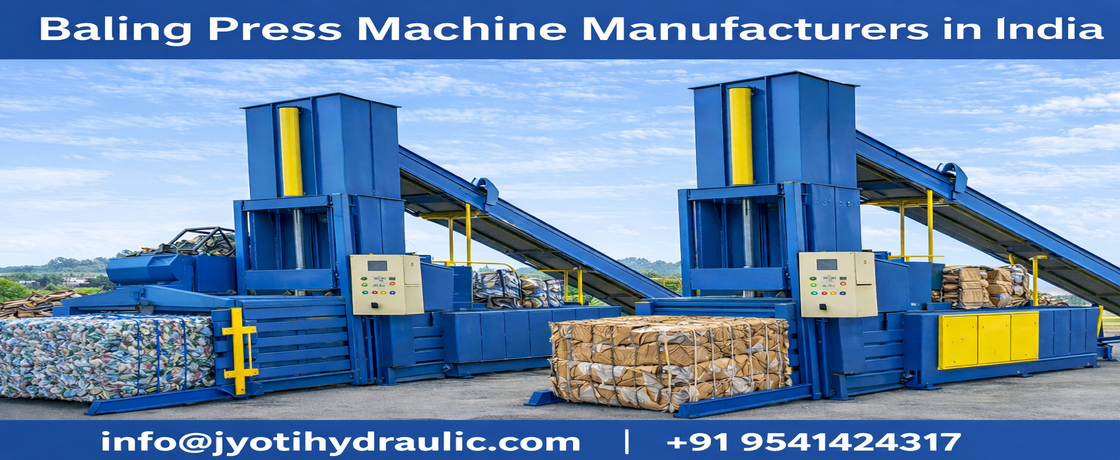
Jyoti Hydraulic manufactures heavy-duty baling press machines for industries that need a practical and cost-effective way to manage scrap materials. Designed for regular industrial use, these machines compress loose waste into dense, manageable bales that are easier to store, transport, handle, and sell to recyclers. From metal fabrication units and recycling yards to packaging, textile, paper, and plastic processing facilities, Jyoti Hydraulic provides baling solutions developed according to the material type, daily scrap volume, required bale size, and operating conditions.
Growing Need for Industrial Baling Machines
Industries across Delhi NCR generate large quantities of recyclable waste. Sheet metal offcuts, aluminium scrap, plastic containers, cardboard, paper, fabric remnants, and other loose materials can occupy valuable floor space if they are not handled properly.
Manual scrap handling is often slow, labour-intensive, and unsafe. Loose material may also require frequent vehicle trips because it cannot be loaded efficiently. A hydraulic baling press addresses these problems by reducing the volume of scrap and converting it into uniformly compressed bales.
The growing emphasis on organized recycling and efficient material recovery has increased the demand for reliable Baling Press Machine Manufacturers in India. Industrial buyers now expect more than basic compression. They need machines that provide consistent bale density, low maintenance, operator safety, and dependable performance over long production cycles.
How a Hydraulic Baling Press Works
A baling press uses hydraulic pressure to compress loose material inside a strong fabricated chamber. After the scrap is loaded, a hydraulic cylinder moves the compression plate forward or downward, depending on the machine design. The material is compressed until the required bale density is achieved.
The finished bale is then secured using suitable wire or strapping before discharge. Metal scrap balers may use automatic or hydraulically operated bale ejection systems, while paper and plastic balers generally use manual or mechanical tying arrangements.
The actual performance of the machine depends on several factors:
- Hydraulic pressure and cylinder capacity
- Compression chamber dimensions
- Type and bulk density of the material
- Motor and hydraulic pump rating
- Bale ejection arrangement
- Machine frame strength
- Cycle time and loading method
A machine should therefore be selected on the basis of the actual application rather than only its advertised capacity.
Technical Features That Influence Performance
The main frame of an industrial baler must withstand repeated compression without bending or developing alignment problems. Heavy steel plates, reinforced joints, quality welding, and proper machining are essential for long-term reliability.
The hydraulic system is equally important. A correctly sized pump, motor, valves, cylinder, oil tank, and filtration system ensures stable pressure and smooth operation. Poorly designed hydraulic circuits may cause overheating, slow cycle times, leakage, or inconsistent bale formation.
Modern machines can be supplied with manual controls, relay-based panels, or PLC-operated systems. Safety features may include emergency stop switches, overload protection, guarded moving parts, door interlocks, and controlled cylinder movement.
Jyoti Hydraulic evaluates the customer’s scrap type and production requirement before recommending the machine configuration. This helps prevent under-sizing, excessive power consumption, and frequent overloading.
Industrial Applications
Hydraulic baling presses are used in a wide range of sectors.
Metal fabrication and automobile units use them for mild steel, aluminium, turning scrap, and production offcuts. Paper mills, printing companies, warehouses, and distribution centres compress cardboard and waste paper. Plastic recycling facilities use balers for PET bottles, plastic film, containers, and packaging waste.
Textile manufacturers can compact fabric cuttings, cotton waste, and garment remnants. Recycling yards also use scrap balers to prepare sorted material for transportation and further processing.
Businesses searching for experienced Scrap Baling Machine Manufacturers in India should select a supplier that understands the handling behaviour of different materials. Metal scrap, paper, plastic, and textile waste do not require the same compression force, chamber design, or tying method.
Benefits of Using a Baling Press Machine
A properly selected baler can deliver several operational advantages:
- Reduces the space occupied by loose scrap
- Improves truck loading and lowers transportation cost
- Creates a cleaner and safer working area
- Reduces manual material handling
- Makes scrap sorting and inventory management easier
- Produces consistent bales for recyclers and scrap buyers
- Helps improve the resale value of recyclable material
- Supports organized waste management practices
The machine also helps management track the quantity of scrap generated and dispatched more accurately.
How to Select the Right Machine
Before requesting a quotation, buyers should identify the material to be baled, its approximate daily quantity, desired bale weight, available floor space, and electrical power supply.
Compression force alone should not be used as the deciding factor. Buyers should also compare chamber size, cycle time, bale dimensions, structural construction, hydraulic components, safety provisions, and service availability.
For mixed scrap applications, the manufacturer should be informed about every material that may enter the machine. This allows the hydraulic system and chamber to be designed with suitable operating margins.
Buyers should also discuss installation requirements, operator training, preventive maintenance, spare parts, and after-sales support before finalizing the order.
Future of Baling Technology
Industrial baling systems are gradually becoming more automated. PLC controls, automatic feeding, bale counting, pressure monitoring, fault alerts, and energy-efficient hydraulic circuits are improving productivity.
Larger recycling facilities are also integrating balers with conveyors, shredders, sorting lines, and material handling systems. These developments help reduce manual work and improve process consistency.
Conclusion
A baling press is a valuable investment for industries that generate recyclable waste regularly. The right machine reduces scrap volume, improves storage, lowers transportation expenses, and creates a more organized workplace.
As one of the established Baling Press Machine Manufacturers in India, Jyoti Hydraulic develops machines for different industrial materials and production capacities. Each solution is selected with attention to compression requirements, operating conditions, safety, and long-term maintenance.
Frequently Asked Questions
What materials can be compressed in a baling press?
Depending on the machine design, it can compress metal scrap, cardboard, paper, plastic bottles, plastic film, textile waste, cotton, aluminium, and other recyclable materials.
How do I choose the correct baling capacity?
The capacity should be selected according to the material type, daily scrap volume, required bale weight, loading frequency, and available working space.
Can one machine bale both metal and paper?
Generally, metal and non-metal materials require different machine designs. A manufacturer should evaluate the application before recommending a multi-material solution.
Does a baling machine reduce transportation costs?
Yes. Compact bales allow more material to be loaded into a vehicle, which can reduce the number of trips required.
Does Jyoti Hydraulic manufacture customized balers?
Yes. Machines can be configured according to scrap type, compression force, bale dimensions, automation level, and production requirements.
Request a Baling Press Machine Quotation
Speak with Jyoti Hydraulic to select a baling press that matches your material, production volume, and operating environment.
📧 Email: info@jyotihydraulic.com
📞 Phone: +91 9541424317
Contact us for a detailed quotation, machine recommendation, or expert consultation for your industrial scrap-handling application.


