
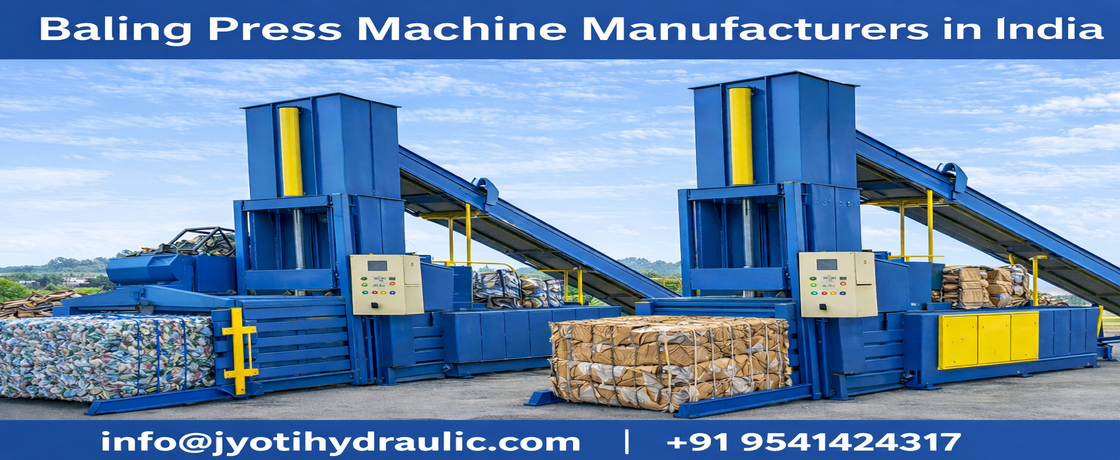
India’s recycling industry is expanding rapidly due to rising industrialization, urban development, infrastructure growth, and increasing awareness about sustainable waste management. From metal scrap yards and automobile dismantling units to steel plants, foundries, fabrication workshops, and manufacturing facilities, scrap generation is increasing every year.
For recycling businesses, loose scrap is difficult to store, transport, load, and sell efficiently. This is where a scrap baling machine becomes a valuable investment. It compresses loose scrap into dense, compact bales that are easier to handle, store, transport, and process.
A well-designed baling press machine can transform scattered metal waste into uniform bundles, improving operational efficiency and profitability. For companies searching for Scrap Baling Machine Manufacturers in India, the key is to choose a manufacturer that understands Indian working conditions, scrap types, power availability, maintenance needs, and long-term business requirements.
Industry Overview: Scrap Recycling Business in India
India is one of the world’s fastest-growing markets for metal consumption. Industries such as construction, automotive, railways, shipbreaking, engineering, appliances, and infrastructure continuously generate large quantities of scrap. This includes iron scrap, steel scrap, aluminium scrap, copper scrap, brass scrap, tin scrap, and mixed metal waste.
Recycling plays an important role in reducing dependency on virgin raw materials. It also helps industries save energy, reduce carbon emissions, and control production costs. In the metal recycling sector, scrap dealers and recycling companies often face common challenges such as:
Limited storage space
High transportation costs
Manual handling difficulties
Irregular scrap shape and size
Low loading efficiency
Safety risks during handling
Lower resale value due to unorganized scrap
A scrap baling machine solves many of these problems by converting loose scrap into compact bales. These bales can be stacked, weighed, loaded, and transported more efficiently. For iron and steel scrap recycling in particular, businesses prefer heavy-duty machines from trusted Iron Scrap Baling Machine Manufacturers in India because iron scrap requires strong hydraulic force, robust structure, and durable components.
Technical Insights: How a Scrap Baling Machine Works
A scrap baling machine is primarily a hydraulic press system designed to compress scrap material into dense bales. The process may look simple from the outside, but a good machine involves advanced engineering, precision fabrication, hydraulic design, and control system integration.
Main Components of a Scrap Baling Machine
1. Hydraulic Power Pack
The hydraulic power pack generates the pressure required to compress scrap. It includes a hydraulic pump, electric motor, oil tank, valves, filters, pressure gauge, and cooling system. The quality of the hydraulic system directly affects machine performance, speed, power consumption, and maintenance.
2. Compression Chamber
This is where the scrap is loaded and compressed. The chamber must be made from high-strength steel to withstand continuous pressure, impact, and abrasion. For iron scrap, the chamber should be especially strong due to the hardness and irregular shape of the material.
3. Hydraulic Cylinders
Hydraulic cylinders apply force to press the scrap from different directions. Depending on the machine design, there may be single, double, or triple compression cylinders. Heavy-duty models often use multiple cylinders for better bale density and shape.
4. Control Panel
Modern baling press machines come with electrical or PLC-based control panels. These help operators manage machine cycles, pressure settings, emergency stop functions, and automatic operations.
5. Ejection System
After compression, the finished bale must be ejected safely and quickly. A good ejection system reduces cycle time and improves production output.
Types of Scrap Baling Machines
Different recycling businesses require different machine types depending on scrap volume, material type, available space, and budget.
Manual Scrap Baling Machine
Suitable for small scrap yards and low-volume recycling operations. It requires more operator involvement but is cost-effective.
Semi-Automatic Scrap Baling Machine
Ideal for medium-scale recycling businesses. It offers a good balance between automation, productivity, and affordability.
Fully Automatic Scrap Baling Machine
Best for large recycling plants, steel processing units, and high-volume scrap operations. These machines reduce manual work, improve consistency, and deliver higher output.
Horizontal Scrap Baling Machine
Commonly used for heavy-duty applications. It offers excellent compression force and is suitable for iron, steel, aluminium, and mixed scrap.
Vertical Scrap Baling Machine
Often used for lighter scrap materials or facilities with space limitations. It is compact and easier to install.
Applications of Scrap Baling Machines
Scrap baling machines are used across a wide range of industries. Their role is not limited to scrap dealers; many manufacturing and processing units use them to manage waste internally.
1. Metal Scrap Yards
Scrap yards handle large volumes of mixed metal scrap every day. A baling machine helps them organize material, reduce storage space, and prepare scrap for sale to foundries or steel plants.
2. Iron and Steel Recycling
Iron and steel scrap are heavy, bulky, and difficult to manage manually. Businesses dealing in ferrous scrap need machines from reliable Iron Scrap Baling Machine Manufacturers in India to ensure strong compression, long machine life, and consistent bale output.
3. Automobile Dismantling Units
End-of-life vehicles generate sheet metal, body parts, frames, aluminium components, and other recyclable materials. A scrap baler helps compress these parts into transport-friendly bundles.
4. Foundries and Steel Plants
Foundries and steel plants require compact scrap for melting and furnace feeding. Baled scrap improves material handling and can support smoother production flow.
5. Manufacturing Units
Fabrication shops, engineering units, appliance manufacturers, and metal cutting facilities generate regular offcuts and waste. A baling press machine allows them to manage this scrap efficiently and recover better value.
6. Aluminium and Non-Ferrous Scrap Recycling
Aluminium cans, profiles, sheets, copper scrap, and brass waste can also be baled depending on machine specifications. Proper compression helps reduce oxidation losses and improves logistics.
Benefits of Using a Scrap Baling Machine
Investing in a scrap baling machine can deliver both operational and financial advantages. For recycling businesses, the machine often pays for itself through savings in transport, labour, space, and improved scrap value.
1. Reduced Storage Space
Loose scrap occupies a large area and creates workplace clutter. Baling compresses scrap into dense blocks, allowing businesses to store more material in less space.
2. Lower Transportation Cost
Transport cost is one of the biggest expenses in scrap recycling. Compact bales allow more material to be loaded into trucks, reducing the number of trips and improving logistics efficiency.
3. Better Scrap Value
Well-compressed scrap is easier for buyers to handle and process. Many foundries and steel plants prefer baled scrap because it is uniform, cleaner, and more furnace-friendly.
4. Improved Workplace Safety
Loose scrap can have sharp edges, irregular shapes, and unstable piles. Baling reduces handling risks and creates a cleaner, safer working environment.
5. Faster Material Handling
Baled scrap can be lifted, stacked, weighed, and transported more easily using cranes, forklifts, or loaders. This improves overall workflow.
6. Labour Cost Savings
Manual handling of scrap requires more workers and more time. Hydraulic baling machines reduce dependence on manual labour and improve productivity.
7. Consistent Output
A quality baling press machine produces uniform bales with consistent density. This improves inventory management and customer confidence.
8. Environmental Benefits
Recycling supports sustainability by reducing waste, conserving natural resources, and lowering energy consumption. Scrap baling machines make recycling more efficient and commercially viable.
Buying Guide: How to Choose the Best Scrap Baling Machine
Choosing the right machine is critical. A low-cost machine may look attractive initially, but if it fails under heavy-duty conditions, it can lead to downtime, repair costs, and production losses. Businesses searching for Baling Press Machine Manufacturers should evaluate both technical and service-related factors.
1. Understand Your Scrap Type
Before selecting a machine, identify the type of scrap you handle most often. Iron scrap, MS scrap, aluminium scrap, steel turnings, sheet metal, and mixed scrap require different compression force and chamber design.
For iron scrap, choose a heavy-duty machine with strong hydraulic cylinders, reinforced body structure, and high pressing force.
2. Check Daily Production Requirement
Estimate how much scrap you need to process per day or per shift. A small machine may be suitable for low-volume operations, while high-volume recyclers need faster cycle time and higher bale output.
3. Evaluate Pressing Force
Pressing force determines bale density and machine capability. Heavy metal scrap requires higher hydraulic pressure. Always choose a machine with adequate tonnage for your material.
4. Consider Bale Size and Density
Different buyers may prefer different bale sizes. Ask your end customers, foundries, or steel plants about their preferred bale dimensions. Uniform bales improve stacking and transportation.
5. Inspect Build Quality
The frame, chamber, blades, pins, and hydraulic components should be built for continuous industrial use. A strong structure ensures longer machine life and lower maintenance.
6. Choose the Right Automation Level
Manual machines are economical but slower. Semi-automatic machines offer better productivity. Fully automatic machines are suitable for large-scale operations where speed and consistency are important.
7. Check Power Consumption
Energy efficiency matters in long-term operations. A well-designed hydraulic system consumes less power while delivering high compression performance.
8. Look for Easy Maintenance
Machines with accessible hydraulic parts, simple controls, quality seals, and proper lubrication points are easier to maintain. This reduces downtime and operating stress.
9. Verify Manufacturer Experience
Experienced Scrap Baling Machine Manufacturers in India understand real-world recycling challenges. They can recommend the right machine based on scrap type, site conditions, and business goals.
10. After-Sales Support
Service support is as important as machine quality. Choose a manufacturer that offers installation guidance, operator training, spare parts support, and technical assistance.
Why Manufacturer Selection Matters
The recycling business runs on uptime. Every hour of machine breakdown can delay dispatches, increase labour costs, and reduce profitability. That is why choosing the right manufacturer is essential.
A dependable manufacturer provides:
Strong machine design
Custom capacity options
High-quality hydraulic components
Reliable electrical controls
Operator-friendly system
Installation support
Spare parts availability
Long-term service assistance
When businesses compare Iron Scrap Baling Machine Manufacturers in India, they should not focus only on price. The real value lies in machine durability, compression performance, production output, and lifetime support.
Future Trends in Scrap Baling and Recycling Technology
The future of scrap recycling in India is moving toward automation, energy efficiency, digital monitoring, and sustainable processing. Recycling businesses that adopt modern machinery early will have a competitive advantage.
1. Automation and Smart Controls
PLC-based machines with automatic cycle control are becoming more popular. They reduce operator dependency and improve consistency.
2. Energy-Efficient Hydraulic Systems
Manufacturers are focusing on hydraulic systems that deliver high force with lower power consumption. This helps recycling businesses reduce operating costs.
3. Compact and Custom Designs
Space is a major issue in many Indian scrap yards. Future machines will be more compact, modular, and customized for specific site layouts.
4. Higher Bale Density
Transport efficiency will continue to drive demand for machines that produce dense, uniform bales. Higher bale density means better truck loading and reduced logistics costs.
5. Integration with Material Handling Systems
Large recycling plants may integrate balers with conveyors, grabbers, cranes, and sorting systems for smoother workflow.
6. Sustainability-Driven Investment
As industries become more environmentally responsible, demand for recycling machinery will grow. Scrap baling machines will remain a key part of circular economy infrastructure.
Conclusion
A scrap baling machine is one of the most important investments for any recycling business in India. It improves storage efficiency, reduces transportation cost, increases scrap value, enhances workplace safety, and supports sustainable industrial operations.
Whether you are running a small scrap yard, a medium-scale metal recycling business, or a large industrial recycling plant, the right baling press machine can significantly improve profitability. Businesses looking for trusted Scrap Baling Machine Manufacturers in India, reliable Iron Scrap Baling Machine Manufacturers in India, or experienced Baling Press Machine Manufacturers should focus on machine strength, hydraulic performance, customization, service support, and long-term value.
In a competitive recycling market, efficiency is the difference between average margins and strong growth. A high-quality scrap baling machine helps you process more material, reduce waste handling problems, and build a more organized, profitable recycling operation.
FAQ Section
1. What is a scrap baling machine?
A scrap baling machine is a hydraulic machine used to compress loose scrap materials into compact bales. It is commonly used for iron scrap, steel scrap, aluminium scrap, copper scrap, and mixed metal waste.
2. Why is a scrap baling machine important for recycling businesses?
It reduces storage space, lowers transportation cost, improves scrap handling, increases resale value, and makes recycling operations more efficient.
3. Which industries use scrap baling machines?
Scrap baling machines are used in metal scrap yards, steel plants, foundries, automobile dismantling units, fabrication workshops, manufacturing plants, and recycling centers.
4. What type of scrap can be baled?
Common materials include iron scrap, mild steel scrap, stainless steel scrap, aluminium scrap, copper scrap, brass scrap, tin scrap, sheet metal, and production offcuts.
5. How do I choose the right scrap baling machine?
Consider your scrap type, daily processing volume, required bale size, pressing force, automation level, power availability, machine build quality, and after-sales service support.
6. Are hydraulic scrap baling machines suitable for iron scrap?
Yes. Hydraulic scrap baling machines are highly suitable for iron scrap because they provide strong compression force and can handle heavy-duty recycling applications.
7. What is the difference between manual, semi-automatic, and fully automatic baling machines?
Manual machines require more operator involvement, semi-automatic machines offer partial automation, and fully automatic machines provide faster, more consistent output with minimal manual handling.
8. Why should I choose an Indian manufacturer?
Indian manufacturers understand local scrap conditions, power requirements, site limitations, maintenance needs, and budget expectations. They can also provide faster service and spare parts support.
9. Does a scrap baling machine reduce transportation cost?
Yes. By compressing loose scrap into compact bales, the machine allows more material to be loaded in each vehicle, reducing the number of trips and lowering logistics expenses.
10. Who are the best scrap baling machine manufacturers in India?
The best manufacturer is one that offers strong machine design, reliable hydraulic technology, customization, after-sales support, and proven industry experience. Jyoti Hydraulic provides robust and efficient solutions for businesses looking to upgrade their recycling operations.
Get the Right Scrap Baling Machine for Your Recycling Business
Ready to improve your scrap handling, reduce operational costs, and increase recycling profitability? Connect with the expert team at Jyoti Hydraulic for a machine recommendation tailored to your business needs.
Whether you need a heavy-duty iron scrap baling machine, a customized hydraulic baling press, or expert guidance before investing, our team is ready to help.
Contact Jyoti Hydraulic today to request a quotation, discuss your requirements, or get expert consultation.
📧 info@jyotihydraulic.com
📞 +91 9541424317


