
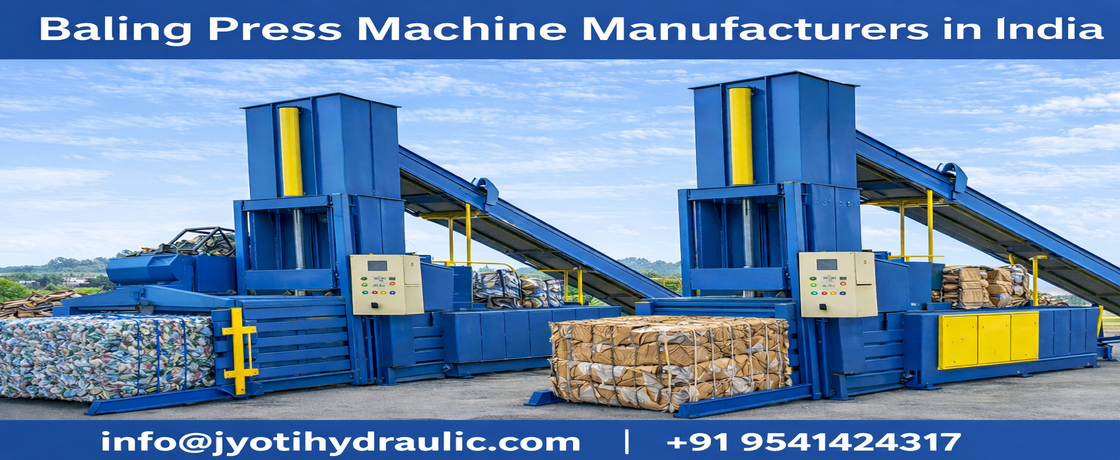
Jyoti Hydraulic brings a practical, industry-first perspective to one of the most important buying questions in the recycling and beverage scrap segment: what should you really expect from a cold drink can baler machine in India in 2026? For scrap processors, beverage bottlers, collection centers, warehouses, and recycling yards, the right baler is not just a machine purchase. It is a productivity decision, a transport-cost decision, and increasingly, a compliance and sustainability decision. In a market where aluminium can usage is rising and recycling value chains are becoming more organized, choosing the correct can baler means balancing price, bale density, throughput, hydraulic performance, and long-term serviceability. India’s aluminium cans market reached 44.78 billion units in 2025 and is projected to grow further through 2034, while recycled aluminium continues to offer major energy savings versus primary production.
Introduction
Cold drink cans may look lightweight and low-volume when scattered, but in bulk they create a serious handling problem. Loose cans consume storage space, increase logistics costs, slow down yard operations, and reduce realization when sold to recyclers or aggregators. A baler machine solves this by compressing cans into dense, uniform bales that are easier to stack, transport, weigh, and process.
That is why businesses today are actively searching for a dependable Cold Drink Can Baling Machine Manufacturer that understands both hydraulic engineering and real scrap-handling conditions. The same applies to buyers comparing an Aluminium Can Baler Machine Manufacturer or a Beer Can Baling Machine Manufacturer for mixed beverage waste streams. The machine may look similar from outside, but actual performance depends on the engineering inside: cylinder quality, hydraulic pressure stability, chamber design, motor sizing, valve reliability, and the efficiency of bale ejection.
Industry Overview
India’s recycling economy is moving toward better collection, higher material recovery, and more structured scrap processing. Beverage cans are especially important because aluminium has repeat recycling value, and the material retains strong market demand when properly sorted and compacted. Global aluminium can recycling reached 75% in 2023 according to the International Aluminium Institute, and Indian market research points to sustained growth in beverage-can demand as packaged drinks, RTD products, and urban consumption continue to expand.
This is exactly why demand is rising for Baling Machine Manufacturers in India that can deliver machines suited to Indian operating realities: voltage fluctuation, dusty environments, untrained operators, irregular feeding patterns, and the need for quick service support. The buyer in 2026 is no longer looking only at the machine’s initial price. They are also checking output per hour, oil temperature stability, power consumption, maintenance ease, and resale value over the machine’s life cycle.
Cold Drink Can Baler Machine Price in India: Expected 2026 Range
In 2026, cold drink can baler machine prices in India are expected to vary widely depending on machine type, automation level, compression force, chamber size, and output capacity. Based on current India-market listings and product pages, small to entry-level vertical beverage can balers can start around ₹3.5 lakh to ₹6 lakh, mid-range hydraulic can balers commonly fall around ₹7 lakh to ₹12 lakh, and larger fully automatic or heavy-duty horizontal systems can reach ₹13 lakh to ₹28 lakh or more. Existing listings show examples around ₹3.5 lakh for vertical aluminium beer can balers, around ₹7.5 lakh for aluminium can baler machines, around ₹13.25 lakh for some higher-capacity can balers, and as high as ₹27.65 lakh for fully automatic hydraulic aluminium can balers.
However, price should never be judged in isolation. Two machines can both be called can balers, yet one may be suitable only for low-volume retail scrap handling, while the other is designed for industrial recycling lines. A lower price often means smaller cylinders, lighter frames, manual door handling, lower output, or reduced automation. A higher price usually reflects stronger structure, larger chamber size, better compaction, higher tonnage, automatic ejection, safety interlocks, and faster cycle time.
Technical Insights Buyers Should Understand
A serious buyer should first understand that can balers are not commodity machines. The core technical factors determine whether the machine will genuinely perform on site.
1. Press Force and Hydraulic Pressure
For aluminium beverage cans, compaction efficiency depends on the relationship between press force, cylinder design, and chamber geometry. Market examples in India show can balers in the 50–90 ton working range, with larger systems going higher depending on configuration. Working pressures in current listings commonly sit around 2500–3000 PSI, which is a practical range for industrial hydraulic compression.
Higher tonnage does not always mean better buying value. If your scrap volume is low, an oversized machine can raise capital cost and power consumption without improving profitability. But if your feed is continuous and your dispatch schedule is tight, under-sizing the machine becomes even more expensive in the long run.
2. Motor Power and Oil System
Indian listings for can balers show motor configurations from roughly 10 HP to 30 HP, with oil tank capacities around 400 to 1000 liters depending on machine size and automation level. That matters because an under-designed oil circuit can overheat, lose pressure stability, and slow cycles during continuous operation.
A well-designed hydraulic system should deliver:
-
consistent pressure without lag,
-
minimal leakage,
-
reliable valve response,
-
stable cycle timing,
-
easy filter and oil maintenance.
3. Bale Size and Bale Weight
Dense, uniform bales improve truck loading and downstream handling. Current India-market examples show bale weights around 40–60 kg in several can and scrap baler configurations, though real output varies with material condition, moisture, contamination, and pre-sorting.
The right question is not only “How much does one bale weigh?” but also:
-
How many bales per shift?
-
How consistent is bale density?
-
Can one operator handle ejection and tying efficiently?
-
Will the bale size fit your transport and recycler requirements?
4. Vertical vs Horizontal Design
Vertical balers are generally chosen for lower floor-space usage and smaller or medium-volume operations. They are common in scrap shops, distribution centers, beverage godowns, and compact recycling points. Horizontal or fully automatic balers are more suitable where material inflow is continuous and labor efficiency matters more than entry-level cost. If your operation handles a mix of soft drink cans, beer cans, and light-gauge metal packaging, a machine with stronger feeding and discharge design becomes more important than just headline tonnage.
Key Applications
A cold drink can baler machine is used across a wider range of industries than many buyers realize:
-
soft drink bottling plants
-
beer and beverage warehouses
-
scrap collection centers
-
aluminium recycling units
-
malls, multiplexes, and stadium waste centers
-
hospitality and event waste handling facilities
-
municipal dry waste sorting centers
-
contract recyclers and aggregators
This is why businesses often search separately for a Beer Can Baling Machine Manufacturer and an Aluminium Can Baler Machine Manufacturer. While the material family is similar, the operating environment may differ. A brewery waste center may require faster batch handling and better liquid contamination tolerance, while a scrap yard may prioritize tougher frame construction for mixed loads.
Benefits of Investing in the Right Machine
The right baler creates value in multiple ways.
First, it reduces storage volume dramatically. Loose cans are expensive to store because they trap air. A baler converts that waste volume into stackable inventory.
Second, it lowers transportation cost per kilogram. Once compacted, material can be moved in larger effective loads.
Third, it improves scrap realization. Recyclers prefer compact, clean, manageable bales over loose, contaminated scrap.
Fourth, it supports cleaner yard management and safer handling. Organized bales reduce clutter and improve workflow.
Fifth, it prepares businesses for a more compliance-driven recycling ecosystem. India’s non-ferrous metal rules place responsibilities on registered recyclers, manufacturers, collection agents, and bulk consumers for environmentally sound storage, transport, record-keeping, and recycling practices.
Buying Guide: How to Select the Best Cold Drink Can Baler Machine in 2026
Know Your Daily Volume
Do not buy based on occasional peak loads. Buy based on realistic daily and monthly can generation. A machine that is too small will create operational bottlenecks. A machine that is too large can lock unnecessary capital.
Check Material Type and Purity
Are you handling only aluminium beverage cans, or mixed metal packaging too? Are the cans flattened, loose, wet, painted, or contaminated? The more variable the material, the more robust the chamber and hydraulic system should be.
Ask for Cycle Time, Not Just Capacity
Many sellers mention tonnage, but serious buyers ask for cycle time, shift output, and average bale density. These numbers reveal the machine’s real performance.
Evaluate Structure and Fabrication Quality
A can baler frame must resist repeated load cycles. Poor fabrication leads to misalignment, door stress, weld cracking, and premature wear. Always inspect the build quality, platen guidance, cylinder mounting, and overall structural rigidity.
Review Automation Features
Useful features may include:
-
auto or semi-auto operation,
-
bale ejection support,
-
interlocks for door safety,
-
PLC or panel-based control,
-
overload protection,
-
emergency stop system.
Confirm Service and Spare Support
This is one of the most overlooked points. A machine is only as good as the service behind it. When comparing Baling Machine Manufacturers in India, check response time, spare availability, installation support, operator training, and hydraulic troubleshooting capability.
Understand Total Landed Cost
Your actual project cost may include:
-
machine base price,
-
GST,
-
transport,
-
installation,
-
commissioning,
-
civil foundation if needed,
-
electrical setup,
-
future AMC or service costs.
Future Trends for 2026 and Beyond
The future of can baling in India will be shaped by three major trends: higher recycling volumes, smarter automation, and stronger compliance expectations. India’s aluminium cans market is forecast to keep expanding, while recycled aluminium remains highly attractive because of its substantial energy savings compared with primary production. At the same time, aluminium scrap prices can remain volatile, which makes dense, efficient baling even more important for protecting logistics margins and scrap value realization.
We can also expect stronger interest in:
-
energy-efficient hydraulic circuits,
-
better bale density with less cycle loss,
-
compact machines for urban waste hubs,
-
sensor-based controls,
-
safer operator interfaces,
-
customized balers for segregated beverage waste streams.
In practical terms, the buyer of 2026 is moving from “What is the cheapest machine?” to “What machine gives the best return over five to ten years?”
Conclusion
A cold drink can baler machine is no longer a secondary utility machine. For many businesses, it is central to material recovery, scrap monetization, warehouse discipline, and sustainable operations. The real buying decision is not about choosing the lowest quoted price. It is about selecting the right capacity, the right engineering, and the right manufacturer support.
If you are comparing a Cold Drink Can Baling Machine Manufacturer, an Aluminium Can Baler Machine Manufacturer, or a Beer Can Baling Machine Manufacturer, focus on machine suitability, bale quality, hydraulic durability, service backup, and lifecycle value. That is how smart buyers choose among leading Baling Machine Manufacturers in India.
FAQ Section
1. What is the average cold drink can baler machine price in India in 2026?
Entry-level machines may start around ₹3.5 lakh, mid-range units often fall in the ₹7–12 lakh segment, and large automatic systems can go beyond ₹13 lakh and even approach ₹28 lakh depending on specifications.
2. Which is better for cans: vertical baler or horizontal baler?
Vertical balers are usually better for smaller and medium-volume operations with limited space. Horizontal balers are preferred for high-volume, continuous, and more automated operations.
3. What factors affect the price of an aluminium can baler machine?
Main factors include compression force, chamber size, automation level, motor power, hydraulic system quality, bale size, machine structure, and service support.
4. Can one machine handle cold drink cans and beer cans together?
Yes. In most cases, both can be processed in the same machine, provided the baler is designed for aluminium beverage can compaction and the material is reasonably segregated.
5. What is the ideal tonnage for a beverage can baler?
That depends on daily volume. Many Indian-market can balers are offered in the 50–90 ton range, while larger systems may go higher for industrial use.
6. Why does bale density matter so much?
Higher bale density improves storage efficiency, lowers transport cost, and often increases acceptance and value in the recycling chain.
7. Is after-sales service important while selecting a baler manufacturer?
Absolutely. Downtime in a baler directly affects scrap movement and yard efficiency. Fast service, genuine spares, and hydraulic troubleshooting support are essential.
8. Are compliance and recycling rules becoming more important in India?
Yes. India’s non-ferrous metal framework places clear responsibilities on recyclers, collection agents, manufacturers, and bulk consumers for proper handling, record-keeping, and environmentally sound recycling.
Contact Jyoti Hydraulic for the Right Solution
Looking for the right machine, the right price, and the right technical guidance for your application?
Contact Jyoti Hydraulic today to:
-
request a quotation,
-
get expert consultation,
-
compare machine options based on your actual scrap volume,
-
choose the best baler for cold drink cans, aluminium cans, and beer cans.
📧 info@jyotihydraulic.com
📞 +91 9541424317


