
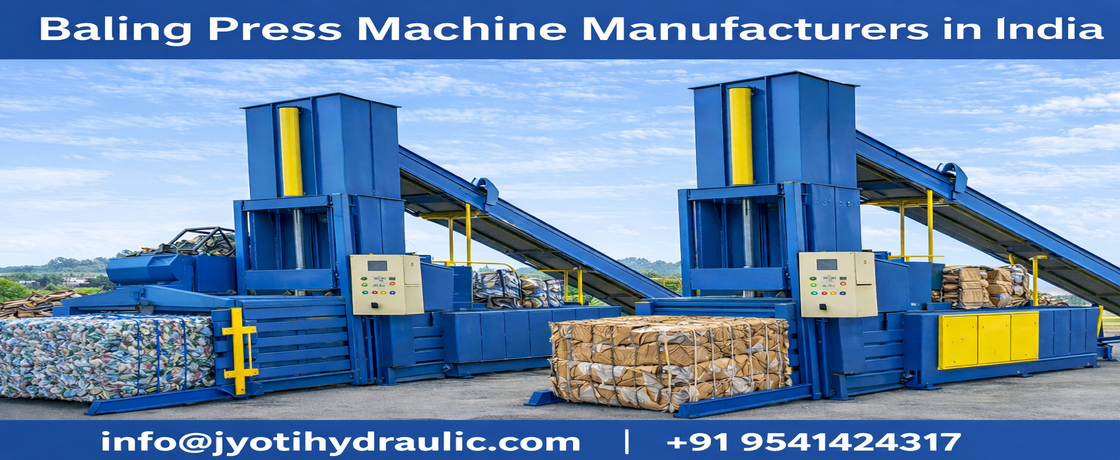
Jyoti Hydraulic is a recognized name among leading Baling Machine Manufacturers in India, delivering advanced hydraulic scrap baling solutions designed for recycling plants, manufacturing units, and waste management industries. As industrial waste generation continues to rise across sectors like metal processing, plastic recycling, logistics, and packaging, the demand for efficient scrap compaction equipment has increased significantly. Scrap baling machines play a critical role in transforming bulky waste into compact, transportable bales, improving storage efficiency and reducing logistics costs.
One of the most common questions asked by recycling companies, scrap traders, and industrial buyers is: “What is the cost of a scrap baling machine in India?” The answer is not fixed because the price depends on numerous technical factors such as hydraulic pressure, chamber size, bale weight, machine structure, automation level, and operational capacity. This in-depth guide explains the complete price structure, technical considerations, applications, and purchasing insights to help businesses make an informed investment.
Industry Overview: Growing Demand for Scrap Baling Machines in India
India is witnessing rapid growth in its recycling and waste management sector. Government initiatives like Swachh Bharat Mission, Plastic Waste Management Rules, and EPR (Extended Producer Responsibility) have pushed industries to adopt systematic waste management solutions.
Scrap baling machines have become essential equipment for industries because they:
-
Reduce scrap storage volume by up to 80–90%
-
Improve recycling efficiency
-
Simplify scrap transportation
-
Increase scrap resale value
-
Maintain a clean and organized industrial environment
Today, modern recycling facilities depend heavily on solutions provided by experienced Scrap Baling Machine Manufacturers in India, who design machines capable of handling different materials including metal scrap, PET bottles, cardboard, plastic waste, aluminum cans, textile waste, and industrial packaging materials.
Similarly, the plastic recycling industry relies on machines developed by PET Bottle Baling Press Machine Manufacturers in India, which are specifically designed to compress lightweight but high-volume plastic materials into dense bundles.
Industries using scrap balers include:
-
Metal recycling plants
-
Plastic recycling facilities
-
Paper and cardboard industries
-
Automobile dismantling yards
-
FMCG packaging units
-
Warehouses and logistics centers
-
Municipal waste processing plants
As recycling infrastructure expands across India, the demand for high-performance hydraulic baling machines is expected to grow significantly in the coming years.
Scrap Baling Machine Price in India
The cost of a scrap baling machine depends primarily on the machine type, production capacity, and technical features.
Below is a general pricing overview available in the Indian market.
Vertical Scrap Baling Machine Price
Price Range: ₹1.5 Lakh – ₹6 Lakh
Vertical balers are compact machines suitable for small and medium-scale recycling units. These machines operate with manual loading and are ideal for materials such as:
-
PET bottles
-
Plastic packaging
-
Paper waste
-
Carton boxes
-
Textile waste
They are space-efficient and require lower initial investment, making them ideal for small recycling businesses.
Horizontal Scrap Baling Machine Price
Price Range: ₹6 Lakh – ₹25 Lakh
Horizontal balers are used in high-volume industrial applications where continuous scrap processing is required. These machines offer higher productivity and produce larger bales.
Industries commonly using horizontal balers include:
-
Metal scrap processing units
-
Large plastic recycling plants
-
Waste sorting facilities
-
Industrial manufacturing plants
Horizontal balers typically include automatic feeding systems and faster compression cycles.
Fully Automatic Scrap Baling Machines
Price Range: ₹20 Lakh – ₹50 Lakh or more
Fully automatic balers are used in large recycling plants with continuous production requirements. These machines integrate advanced technologies such as:
-
PLC automation systems
-
Conveyor feeding systems
-
Automatic bale tying
-
Continuous compression cycles
These machines significantly reduce manual labor and increase production efficiency.
Key Factors That Influence Scrap Baling Machine Cost
Understanding what affects the price of a baling machine helps businesses select the right equipment.
1. Hydraulic Pressing Force
Hydraulic pressure determines the machine’s compression capability.
Common pressure capacities include:
-
30 Ton
-
60 Ton
-
100 Ton
-
150 Ton
-
200 Ton or higher
Higher pressure machines produce denser bales and are typically used for metal scrap processing.
2. Bale Density and Weight
Different industries require different bale weights depending on transport and recycling requirements.
Typical bale weight ranges include:
-
50 kg – 100 kg (PET bottles and plastic waste)
-
150 kg – 250 kg (paper and cardboard)
-
300 kg – 500 kg (mixed industrial scrap)
-
500 kg – 1000 kg (metal scrap)
Machines designed for heavier bales require stronger frames and larger hydraulic cylinders, increasing the cost.
3. Chamber Size and Machine Structure
The compression chamber determines how much scrap can be processed per cycle.
Common chamber sizes include:
-
24″ × 36″
-
30″ × 48″
-
40″ × 60″
-
Custom heavy-duty chambers for industrial use
Machines built with thicker steel plates and reinforced structures cost more but provide longer durability and operational stability.
4. Hydraulic System Design
The hydraulic system is the heart of a baling machine.
Important components include:
-
Hydraulic cylinders
-
Industrial hydraulic pumps
-
Directional control valves
-
Oil cooling systems
-
Hydraulic power packs
Machines with high-quality hydraulic components ensure better efficiency and longer service life.
5. Automation Level
Automation plays a significant role in determining machine cost.
Manual Baling Machines
Require operator involvement for loading and bale tying.
Semi-Automatic Machines
Provide faster operation with partial automation.
Fully Automatic Machines
Include automatic feeding, compression, and bale tying systems.
Higher automation increases production speed but also increases initial investment.
Technical Insights: How Scrap Baling Machines Work
A scrap baling machine works using hydraulic pressure to compress loose materials into compact bales.
Operating Process
-
Scrap material is loaded into the compression chamber.
-
Hydraulic cylinders apply pressure using a pressing plate.
-
Material is compacted under high pressure.
-
Once compressed, the bale is tied using wires or straps.
-
The bale is ejected from the chamber.
Typical Machine Specifications
| Specification | Typical Range |
|---|---|
| Hydraulic Pressure | 30–200 Ton |
| Motor Power | 5 HP – 30 HP |
| Cycle Time | 30–90 seconds |
| Bale Density | 300–800 kg/m³ |
| Power Supply | 3 Phase Industrial |
Advanced machines can process multiple tons of scrap per hour, depending on machine size and automation.
Applications of Scrap Baling Machines
Scrap baling machines are widely used across several industries.
Metal Scrap Recycling
Compresses aluminum, copper, steel, and iron scrap for easy melting and recycling.
Plastic Recycling
Used extensively by PET Bottle Baling Press Machine Manufacturers in India for compressing plastic bottles and containers.
Paper and Cardboard Recycling
Compacts packaging waste from warehouses and factories.
Textile Industry
Compresses fabric scraps and garment waste.
Automobile Scrap Industry
Processes dismantled vehicle parts and sheet metal waste.
Industrial Waste Management
Helps manufacturing plants manage production waste efficiently.
Benefits of Using Scrap Baling Machines
Improved Storage Efficiency
Scrap volume is reduced significantly, saving warehouse space.
Lower Transportation Costs
Compressed bales reduce freight costs and increase transport efficiency.
Increased Scrap Market Value
Well-compressed scrap bales fetch higher prices in recycling markets.
Environmental Compliance
Helps industries follow waste management regulations.
Improved Workplace Safety
Reduces clutter and improves plant safety conditions.
Buying Guide: How to Select the Right Scrap Baling Machine
Choosing the right machine requires analyzing operational requirements carefully.
Evaluate Scrap Type
Different materials require different compression forces.
Determine Daily Scrap Volume
High-volume operations require horizontal or automatic balers.
Check Machine Durability
Ensure the machine frame and hydraulic system are industrial-grade.
Consider Energy Efficiency
Efficient hydraulic systems reduce electricity consumption.
Choose Experienced Manufacturers
Working with established Baling Machine Manufacturers in India ensures better quality and reliable after-sales support.
Future Trends in Scrap Baling Machine Technology
The recycling industry is evolving with technological advancements.
Smart Monitoring Systems
Future machines will include IoT-based monitoring for predictive maintenance.
AI-Based Waste Sorting
Integration with automated waste sorting systems will improve recycling efficiency.
Energy Efficient Hydraulics
Advanced hydraulic systems will reduce power consumption.
High-Density Baling Technology
New designs will produce higher-density bales to optimize logistics and recycling efficiency.
These innovations will significantly improve the performance and sustainability of scrap processing operations.
Conclusion
Scrap baling machines have become a vital component of modern recycling and waste management systems. They enable industries to manage large volumes of waste efficiently while reducing transportation costs and improving scrap value.
The price of a scrap baling machine in India varies depending on machine type, hydraulic capacity, chamber size, automation level, and operational requirements. Businesses should carefully evaluate these factors before making an investment.
By choosing machines from experienced Scrap Baling Machine Manufacturers in India and PET Bottle Baling Press Machine Manufacturers in India, companies can ensure long-term operational efficiency, durability, and better return on investment.
Frequently Asked Questions (FAQ)
1. What is the average price of a scrap baling machine in India?
The average price ranges between ₹1.5 lakh to ₹50 lakh, depending on machine type, capacity, and automation features.
2. Which materials can be processed using a scrap baler?
Scrap baling machines can compress:
-
Metal scrap
-
PET bottles
-
Plastic waste
-
Cardboard and paper
-
Aluminum cans
-
Textile waste
3. How much scrap can a baling machine process per hour?
Depending on machine capacity, scrap balers can process 500 kg to 5 tons per hour.
4. What is the typical lifespan of a scrap baling machine?
With proper maintenance and high-quality components, a scrap baler can operate efficiently for 10–20 years.
5. Is a scrap baling machine profitable for recycling businesses?
Yes. By compressing scrap into dense bales, businesses can reduce logistics costs, increase scrap resale value, and improve operational efficiency, making it a highly profitable investment.
Contact Jyoti Hydraulic for Expert Scrap Baling Solutions
If you are planning to purchase a high-quality scrap baling machine, choosing the right manufacturer is essential for long-term performance and reliability.
Jyoti Hydraulic offers advanced hydraulic baling machines engineered for durability, efficiency, and industrial productivity.
📧 Email: info@jyotihydraulic.com
📞 Phone: +91 9541424317
Contact our experts today to:
✔ Request a customized quotation
✔ Get professional consultation for your recycling plant
✔ Select the most suitable baling machine for your business
Our team will guide you in choosing the right solution to improve your scrap management and recycling efficiency.


