
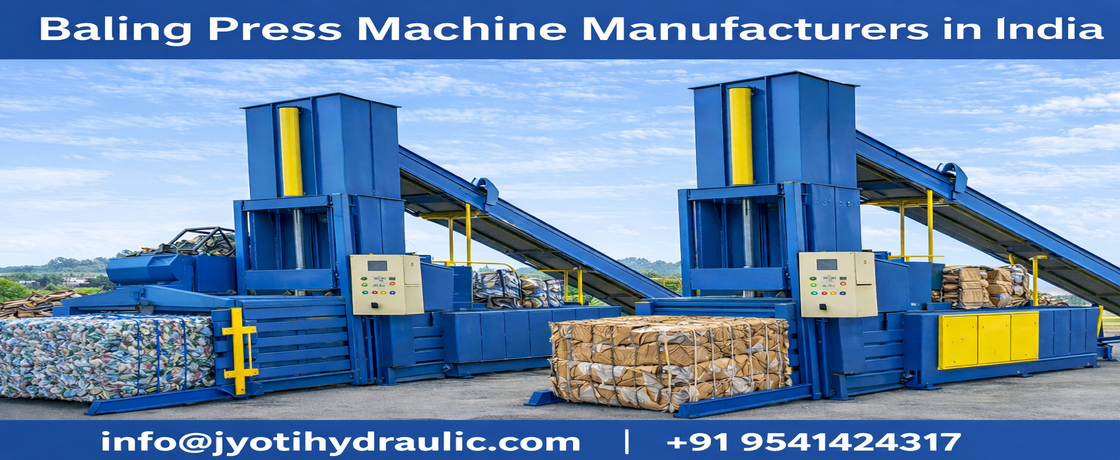
Jyoti Hydraulic understands that selecting a baling press is not simply about comparing machine prices. The right equipment must match the type of scrap, daily processing volume, required bale size, available floor space, and long-term production goals. A dependable baling press helps recycling businesses reduce scrap volume, improve material handling, lower transportation costs, and maintain a cleaner, safer workplace.
Baling Press Machine Industry in India
India’s recycling sector is expanding as metal processors, foundries, automobile manufacturers, warehouses, and scrap dealers look for efficient ways to manage industrial waste. Loose scrap occupies significant space and is difficult to store or transport. A hydraulic baling press compresses this material into dense, manageable bales.
This growing demand has increased the number of Scrap Baling Machine Manufacturers in India. However, machine quality can vary considerably. Buyers must examine structural strength, hydraulic performance, operating safety, service support, and component quality before placing an order.
Understand Your Scrap Before Selecting a Machine
Every scrap material behaves differently under compression. Light sheet metal requires a different machine configuration than heavy iron scrap, turning scrap, aluminum cans, or mixed industrial waste.
Before contacting a Baling Press Machine Manufacturer, determine:
- Type and thickness of material
- Scrap quantity generated per shift
- Required bale dimensions and weight
- Loading method
- Preferred discharge system
- Available electrical power
- Level of automation required
Providing this information helps the manufacturer recommend the correct pressing capacity, chamber size, motor rating, and hydraulic arrangement.
Important Technical Features
Machine Frame
The baler frame must tolerate repeated high-pressure cycles without bending or developing cracks. Look for a rigid steel structure, reinforced compression chamber, accurately machined components, and strong welding at critical load points.
Hydraulic System
The hydraulic power pack directly affects compression speed and machine reliability. A well-engineered system should include quality pumps, cylinders, control valves, seals, filters, and pressure protection devices. Proper hydraulic circuit design also helps control heat generation and energy consumption.
Compression Capacity
Higher tonnage does not automatically mean better performance. The required pressing force depends on the material, feed density, chamber size, and desired bale weight. An experienced manufacturer evaluates the complete application instead of recommending an oversized machine.
Control and Safety
Modern balers may include PLC controls, automatic cycle operation, emergency stop switches, pressure indicators, motor overload protection, limit switches, and safety interlocks. These features reduce operator dependency and help prevent unsafe operation.
Applications of Baling Press Machines
Hydraulic baling machines are commonly used for:
- Iron and steel scrap
- Aluminum and copper waste
- Automobile body scrap
- Sheet-metal cuttings
- Paper and cardboard
- Plastic bottles and packaging waste
- Textile and fabric waste
- Industrial recycling operations
Heavy metal applications require special attention. Reliable Iron Scrap Baling Machine Manufacturers in India use reinforced chambers, high-capacity cylinders, wear-resistant compression plates, and heavy-duty hydraulic units to handle demanding workloads.
Benefits of Using a Baling Press
A properly selected machine offers several operational advantages:
- Reduces the storage volume of loose scrap
- Produces uniform bales for easier stacking
- Lowers loading and transportation costs
- Improves scrap-yard organization
- Reduces manual material handling
- Supports faster recycling and resale
- Improves workplace safety
- Increases the commercial value of processed scrap
Consistent bale size also makes weighing, dispatching, and inventory management easier.
How to Select the Right Manufacturer
When comparing suppliers, do not make a decision based only on the quoted price. Evaluate the manufacturer’s experience with your specific scrap material and ask for complete technical details.
A reliable supplier should be able to explain why a particular machine capacity, chamber size, motor, and hydraulic configuration suits your operation. Also check whether the manufacturer provides installation support, operator training, spare parts, preventive maintenance, and after-sales assistance.
Customization is equally important. Your machine may require a specific bale size, conveyor loading system, automatic ejection arrangement, or control configuration. A capable manufacturer should adapt the equipment to your production conditions rather than offering one standard model for every application.
Future of Scrap Baling Technology
The next generation of baling machines will focus on energy efficiency, automation, and production monitoring. PLC-controlled cycles, digital pressure tracking, remote fault diagnosis, preventive maintenance alerts, and optimized hydraulic circuits are becoming increasingly relevant.
These developments will help recycling plants increase output, reduce unplanned downtime, and monitor machine performance more accurately.
Conclusion
Choosing the right Baling Press Machine Manufacturer requires a careful review of machine construction, hydraulic engineering, safety, production capacity, customization, and technical support. The lowest-priced machine may become expensive if it causes frequent breakdowns, low bale density, or excessive power consumption.
Jyoti Hydraulic provides application-focused baling solutions for scrap processing and recycling operations. By understanding the customer’s material, output requirements, and working conditions, the company helps businesses select equipment that offers dependable performance and long-term value.
Frequently Asked Questions
What is a baling press machine?
A baling press is a hydraulic machine that compresses loose scrap or recyclable waste into compact bales for easier storage, handling, and transportation.
Which baling press is suitable for iron scrap?
Iron scrap generally requires a heavy-duty baler with a reinforced chamber, suitable compression force, strong hydraulic cylinders, and wear-resistant components.
How is the correct baling capacity selected?
Capacity depends on scrap type, material thickness, hourly volume, desired bale weight, chamber dimensions, and the number of operating shifts.
Can a scrap baling machine be customized?
Yes. Chamber size, bale dimensions, loading arrangement, discharge method, controls, and automation can be customized according to the application.
Why should after-sales support be considered?
Timely service, spare parts availability, operator training, and maintenance assistance help reduce downtime and protect the machine investment.
Request a Quotation
Planning to install a new baling press or upgrade your existing scrap-handling system? Contact Jyoti Hydraulic for machine selection support, a customized quotation, and expert technical consultation.
📞 +91 9541424317


