
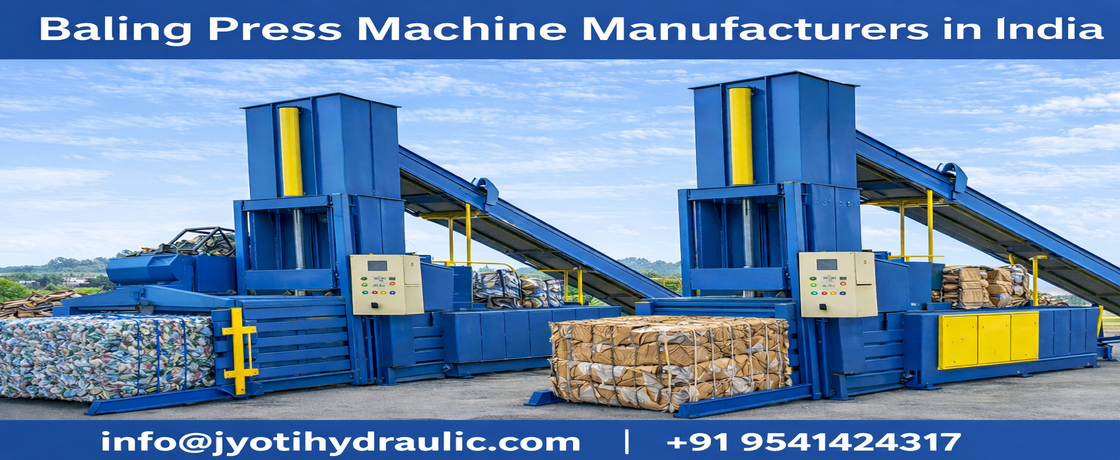
Jyoti Hydraulic brings practical engineering to one of the biggest needs in modern waste handling: faster, cleaner, and more profitable plastic recycling. As India strengthens its recycling ecosystem and plastic waste compliance framework, businesses are under growing pressure to sort, compress, and move recyclable material more efficiently. Recent policy updates continue to formalize plastic waste reporting, processing, and Extended Producer Responsibility obligations, which makes reliable compaction equipment more important for recyclers and bulk waste generators alike.
A hydraulic plastic baler machine for recycling industry operations is no longer just a convenience. It is a core productivity asset. Whether you handle PET bottles, film scrap, rigid plastic, or post-industrial packaging waste, a baler helps reduce storage volume, simplify transport, and improve downstream recycling value.
That is why industrial buyers often search for trusted Baling Press Machine Manufacturers, Scrap Baling Machine Manufacturers in India, and PET Bottle Baling Press Machine Manufacturers in India when upgrading their waste management lines. The right machine can directly affect labor cost, logistics efficiency, and bale quality.
Industry Overview
India’s recycling and waste-handling ecosystem is moving toward better segregation, traceability, and infrastructure. Government-backed circular economy recommendations have emphasized material recovery facilities, dry waste processing, digitized waste flow tracking, and stronger recycling linkages. The same guidance highlights the need for better recovery of dry waste streams and improved connections between collection, sorting, and recycling infrastructure.
This shift is creating stronger demand for:
- Plastic recycling machines
- Hydraulic baling press systems
- Scrap compression machines
- Industrial waste management equipment
- PET bottle processing lines
For recycling plants, warehouses, FMCG companies, and manufacturing units, loose plastic waste creates a simple but expensive problem. It takes too much space, costs more to move, and slows sorting operations. A baling press solves that by turning bulky scrap into compact, stackable bales.
Why demand is rising
- Higher waste volumes from packaging and logistics
- Better awareness of recycling value recovery
- Pressure to lower transport and storage costs
- Cleaner plant operations and safer handling
- Stronger compliance and reporting expectations in waste processing
Role of automation in waste management
Automation matters because recycling margins are often won through consistency. A machine that creates uniform bales, reduces manual effort, and shortens cycle time can improve plant throughput without expanding floor space.
What is a Hydraulic Plastic Baler Machine?
A hydraulic plastic baler machine is a heavy-duty compression system designed to press loose plastic waste into dense bales for easy storage, handling, and transport.
Working principle
The machine uses a hydraulic power pack to push a ram or platen against plastic material loaded into a chamber. As pressure builds, the waste is compressed into a compact block. The bale is then tied with straps or wire and ejected manually or automatically.
Common types of balers
1. Vertical balers
These are ideal for smaller and medium-scale operations. Material is loaded from the front or top, compressed vertically, and tied manually.
Best for:
- PET bottles
- Film waste
- Cartons with plastic content
- Smaller recycling centers
2. Horizontal balers
These are used in high-volume operations. They support continuous feeding and higher throughput.
Best for:
- Large recycling plants
- Warehouses
- Packaging units
- Distribution centers
3. Semi-automatic balers
These combine machine-driven compression with partial manual bale tying or discharge.
Best for:
- Growing businesses
- Medium output applications
- Plants balancing cost and productivity
4. Fully automatic balers
These systems support automatic feeding, compaction, tying, and discharge for continuous industrial use.
Best for:
- Large-volume PET bottle lines
- Centralized waste recovery facilities
- Export-oriented recycling units
Hydraulic Plastic Baler Machine in Recycling Industry: Technical Insights
Industrial buyers do not just buy a machine. They buy pressure performance, uptime, and bale consistency.
Hydraulic system explanation
A hydraulic baling press typically includes:
- Hydraulic cylinder
- Power pack
- Oil tank
- Directional control valves
- Pressure gauges
- Electric motor
- Compression chamber
- Bale ejector system
The hydraulic unit converts motor power into fluid pressure. That pressure moves the ram with controlled force. Higher pressure means better compaction, but the right design balances pressure, cycle speed, and energy use.
Typical technical parameters
Depending on model and application, machines may vary in:
- Pressure capacity: from light-duty units to high-tonnage industrial machines
- Motor power: selected based on chamber size, material density, and cycle time
- Bale size: customized for transport efficiency and storage planning
- Chamber dimensions: based on feedstock type and hourly volume
- Cycle time: critical for high-throughput applications
Material compatibility
A well-designed hydraulic baler can handle:
- PET bottles
- HDPE containers
- LDPE film scrap
- Plastic packaging waste
- Injection molding scrap
- Blown film waste
- Laminated plastic rejects
- Industrial plastic trimmings
This is why businesses compare PET Bottle Baling Press Machine Manufacturers in India carefully. PET bottles are lightweight but bulky. Without proper compression, transport becomes inefficient and expensive.
Safety and automation features
A modern baler should include:
- Emergency stop system
- Interlocked doors
- Overload protection
- Pressure control safeguards
- Operator-friendly control panel
- Auto return ram
- Bale full indicator
- Optional PLC-based automation
These features improve safety while reducing operator fatigue and error.
Key Applications
Hydraulic plastic balers are used across multiple sectors.
Recycling plants
Loose plastic waste arrives in mixed or sorted form. Balers reduce handling time and prepare materials for transport to washing, shredding, or reprocessing lines.
Manufacturing industries
Plastic rejects, runners, trims, and packaging waste can quickly fill valuable shop-floor space. A baler keeps production areas cleaner and more organized.
Warehouses and logistics hubs
Stretch film, PET straps, protective plastic, and packaging scrap accumulate daily. Baling reduces clutter and improves dispatch area efficiency.
FMCG and packaging sector
Consumer packaging waste, defective containers, and rejected bottle stock can be compacted for easy resale or recycling.
Benefits of Using Plastic Baler Machines
1. Space saving
Loose plastic occupies a huge volume. Baled scrap can reduce storage footprint significantly.
2. Lower transportation cost
Denser bales mean more material per truckload. This improves freight economics.
3. Better recycling efficiency
Sorted and compacted material is easier to move, sell, and process further.
4. Cleaner operations
Baling reduces scattered waste and improves housekeeping standards.
5. Improved material value
Many recyclers prefer well-packed, consistent bales because they are easier to handle and count.
6. Reduced labor burden
A hydraulic baling press streamlines repetitive waste-handling work.
Comparison Table: Manual vs Automatic Balers
| Feature | Manual / Basic Vertical Baler | Automatic / Advanced Baler |
|---|---|---|
| Feeding | Manual | Continuous or assisted |
| Bale tying | Manual | Semi-auto or automatic |
| Output capacity | Low to medium | Medium to high |
| Labor requirement | Higher | Lower |
| Bale consistency | Moderate | High |
| Best for | Small units | Large industrial plants |
| Initial cost | Lower | Higher |
| ROI potential | Good for smaller volumes | Excellent for high volumes |
Buying Guide: How to Choose the Right Baler
Choosing the right machine requires more than comparing price tags.
Capacity selection
Estimate daily or hourly plastic waste generation. Buying too small creates bottlenecks. Buying too large can waste capital.
Material type
PET bottles, rigid plastics, and film scrap behave differently under compression. Machine design should match the material profile.
Automation level
A small warehouse may need a vertical semi-automatic baler. A major recycler may need a horizontal automatic system.
Budget vs ROI
Look at the full business case:
- labor savings
- transport savings
- floor space savings
- resale value of baled scrap
- machine life and maintenance cost
Manufacturer credibility
When evaluating Scrap Baling Machine Manufacturers in India or Baling Press Machine Manufacturers, check:
- Experience in hydraulic engineering
- Customization ability
- Installed base
- Service response time
- Spare parts support
- Build quality
- Safety compliance
Mini Use-Case Example
A mid-sized PET bottle collection center handling loose bottles often faces two problems: storage overflow and poor truck utilization.
After installing a hydraulic PET bottle baling press:
- the same floor area can hold much more processed scrap
- transport frequency drops because each load carries more material
- bale handling becomes faster with forklifts
- recyclers receive cleaner, more consistent loads
That directly improves operational control and commercial value.
Why Choose Jyoti Hydraulic?
When industrial buyers look for dependable PET Bottle Baling Press Machine Manufacturers in India or Scrap Baling Machine Manufacturers in India, they need more than a seller. They need a solution partner.
1. Practical industry experience
Jyoti Hydraulic understands how recycling plants, scrap yards, warehouses, and production units actually work. Machine recommendations must match real operating conditions.
2. Strong build quality
A hydraulic baler works under repeated pressure cycles. Frame strength, cylinder quality, valve performance, and chamber design matter.
3. Customization options
Different industries need different bale sizes, feed openings, force ratings, and automation levels. Custom engineering makes the machine more productive.
4. Made in India advantage
Local manufacturing supports faster delivery, easier service, spare availability, and better value for Indian buyers.
5. After-sales support
Downtime costs money. Timely service, maintenance guidance, and parts support make a real difference.
Future Trends in Baling Technology
The next generation of plastic recycling equipment will focus on smarter control and lower operating cost.
Smart automation
PLC systems, sensors, and cycle monitoring help improve consistency and reduce operator dependence.
IoT-enabled machines
Connected machines can support performance tracking, maintenance alerts, and production planning.
Energy-efficient hydraulic systems
Modern hydraulic designs aim to reduce power draw while maintaining compression force.
Better integration with waste sorting lines
Balers will increasingly work as part of complete recycling systems that include conveyors, sorting platforms, shredders, and washing lines.
This direction aligns with broader policy and infrastructure trends that emphasize digitized waste flow tracking, material recovery facilities, and stronger recycling systems.
Conclusion
A hydraulic plastic baler machine for recycling industry operations is one of the smartest investments for businesses handling recyclable plastic waste at scale. It saves space, lowers logistics cost, improves bale quality, and supports more efficient recycling workflows.
As recycling demand grows and waste handling becomes more structured, the need for reliable Baling Press Machine Manufacturers will only increase. Businesses that invest in the right hydraulic baling press today can improve both compliance readiness and commercial efficiency.
For industrial buyers, the key is simple: choose a machine that fits your material, volume, automation needs, and long-term operating goals. With the right engineering support, a baler becomes more than waste equipment. It becomes a productivity tool.
FAQs
1. What is a hydraulic plastic baler machine?
A hydraulic plastic baler machine is an industrial machine that compresses loose plastic waste into compact bales using hydraulic force. It improves storage, transport, and recycling efficiency.
2. How does a PET bottle baling press work?
A PET bottle baling press loads bottles into a chamber, compresses them with a hydraulic ram, and forms dense bales that are tied and removed for transport or recycling.
3. What is the price of a baling press machine in India?
The price depends on machine type, bale size, pressure capacity, motor rating, automation level, and customization. Vertical balers generally cost less than automatic horizontal balers.
4. Which industries use scrap baling machines?
Scrap baling machines are widely used in recycling plants, plastic processing units, warehouses, logistics hubs, FMCG companies, packaging units, and manufacturing facilities.
5. How do I choose the right baler?
Check your daily scrap volume, material type, required bale size, labor availability, budget, and expected ROI. Also evaluate the manufacturer’s service and customization support.
6. What materials can a plastic baler handle?
Most plastic balers can handle PET bottles, LDPE film, HDPE containers, industrial plastic scrap, packaging waste, and production rejects, depending on machine design.
7. Why is bale density important?
Higher bale density reduces storage needs, improves truck loading efficiency, and often increases the resale value of recyclable material.


