
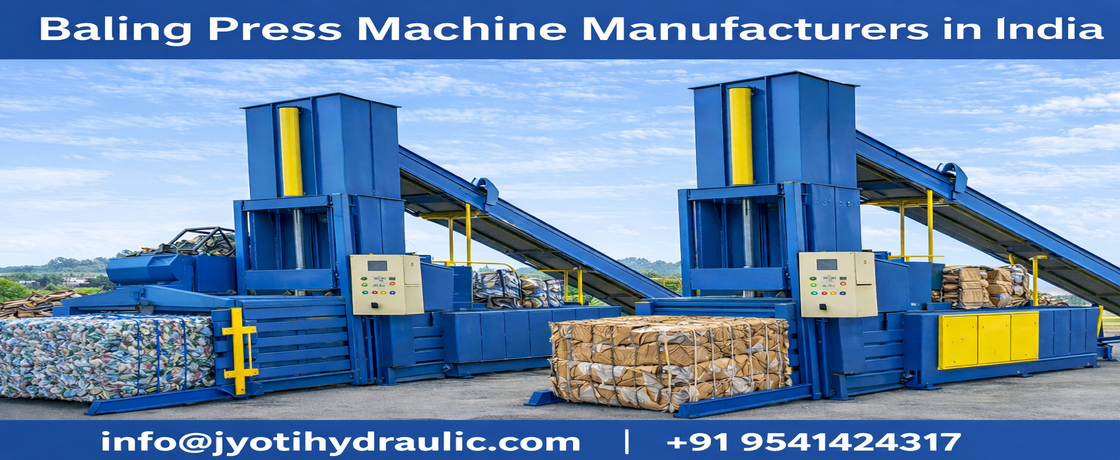
Jyoti Hydraulic brings a practical, engineering-first perspective to industrial waste handling, because in metal recycling, efficiency does not begin at the shredder or furnace—it begins at compaction. An industrial scrap baling machine is one of the most important assets in a recycling plant, helping operators convert loose, bulky scrap into dense, manageable bales that are easier to store, transport, sell, and process. For plant owners, procurement teams, and recycling professionals, choosing the right baler is not just about capacity; it is about throughput, power efficiency, material compatibility, maintenance support, and long-term return on investment.
Introduction
Metal recycling plants deal with a constant flow of irregular, high-volume scrap such as MS scrap, aluminum offcuts, sheet trimmings, copper pieces, tin scrap, and mixed industrial leftovers. Without compaction, these materials consume excessive floor space, create handling inefficiencies, raise transportation costs, and reduce the overall productivity of the yard.
That is where a baling press machine becomes essential. It compresses loose scrap into tightly packed bales using hydraulic force, allowing recycling units to standardize output, improve logistics, and meet buyer specifications. Whether the operation handles iron, steel, non-ferrous scrap, or even packaging waste, the right machine can dramatically improve plant economics.
This guide explains the industrial scrap baling machine in detail—how it works, what technical features matter, where it is used, what benefits it offers, and how to select the right model for your recycling plant.
Industry Overview
The recycling industry in India has expanded rapidly due to rising raw material costs, stronger sustainability goals, and increasing pressure on manufacturers to reduce landfill dependency. Scrap processors are no longer operating with a purely manual approach. Modern yards now rely on automation, hydraulic systems, and material handling equipment to improve output quality and reduce operating cost.
As a result, demand for reliable Scrap Baling Machine Manufacturers in India has grown steadily. Recycling businesses are looking for machines that can handle varying feed sizes, irregular loading conditions, and continuous-duty operation in harsh yard environments. At the same time, sectors outside metal recycling—such as plastic packaging, warehousing, textiles, and PET bottle recovery—have also contributed to demand for compacting solutions. This is why many buyers also compare solutions from PET Bottle Baling Press Machine Manufacturers in India when evaluating compacting technology, hydraulic design standards, and machine durability.
Among the most searched suppliers today are Iron Scrap Baling Machine Manufacturers in India, especially by steel re-rollers, scrap aggregators, metal trading companies, and foundries that require dense bales for efficient furnace charging and freight optimization.
What Is an Industrial Scrap Baling Machine?
An industrial scrap baling machine is a hydraulic compaction system designed to compress metal scrap into high-density bales. These machines typically include:
- A heavy-duty baling chamber
- Hydraulic cylinders for compression
- A power pack with motor, pump, valves, and oil tank
- A bale ejector or discharge system
- Control panel for operation and safety
- Feeding arrangement, manual or conveyor-assisted
The machine works by loading scrap into a chamber and applying high hydraulic pressure from one or more directions. This compacts the material into a cuboid or block-shaped bale. The final bale size depends on chamber dimensions, cylinder force, and machine configuration.
In industrial use, balers are commonly categorized by:
- Manual, semi-automatic, or automatic operation
- Single-compression, double-compression, or triple-compression systems
- Horizontal or vertical chamber design
- Ferrous or non-ferrous application suitability
For metal recycling plants, the most common preference is a robust hydraulic baling press machine built for continuous operation and high tonnage.
Technical Insights That Buyers Must Understand
1. Hydraulic Pressure and Compaction Force
The performance of a scrap baler depends heavily on hydraulic tonnage. Higher compression force produces denser bales, especially for springy, bulky, or high-rebound scrap. Iron and steel scrap often require greater pressure than aluminum or thin sheet metal.
A buyer should not judge a machine only by motor HP. The real consideration is the relationship between:
- Cylinder bore
- Operating pressure
- Stroke length
- Cycle time
- Chamber volume
A properly engineered system balances pressure with speed. Too much pressure with poor oil flow design can slow down production. Too much speed with insufficient pressure can create loose bales.
2. Chamber Size and Feed Material
The chamber must match the type of scrap generated in your plant. Large-cut industrial scrap requires a wider chamber and stronger structure. Small turnings, light gauge sheets, and punchings may need different feeding and retention arrangements.
A mismatch between material size and chamber geometry leads to:
- Uneven bale density
- Jamming
- Reduced cycle efficiency
- Premature wear
3. Bale Density
Bale density affects storage, transport cost, and resale value. Higher density means more tonnage per truckload and better furnace-friendly material handling. Dense bales also reduce spillage and improve inventory organization.
4. Structural Strength
A baler processing iron or heavy metal scrap must have a reinforced chamber, wear-resistant liners, robust weld quality, and strong guide systems. Weak structures deform over time under repeated compression loads.
This is one reason buyers prefer established Iron Scrap Baling Machine Manufacturers in India with experience in structural hydraulic machinery, not just general fabrication.
5. Power Consumption
Energy efficiency is becoming a critical parameter. Modern hydraulic balers may include:
- Optimized pump sizing
- Better valve response
- Lower idle load
- Efficient motor selection
- Optional PLC-based automation
Energy cost per ton processed is more useful than total motor rating when evaluating machine efficiency.
6. Maintenance Accessibility
A machine may look strong at the time of purchase, but service access determines long-term usability. Check:
- Cylinder seal accessibility
- Filter replacement ease
- Lubrication points
- Valve block layout
- Electrical panel protection
- Spare parts availability
7. Safety Features
Industrial balers should have:
- Emergency stop
- Interlocks
- Overload protection
- Pressure relief valves
- Safe chamber access
- Reliable electrical control logic
A good machine protects both production and operators.
Applications of Scrap Baling Machines
Industrial scrap baling systems are widely used across sectors, including:
Metal Recycling Plants
For compressing iron scrap, steel cuttings, aluminum sections, copper scrap, and mixed industrial waste into manageable bales.
Manufacturing Units
Sheet metal fabrication shops, automotive component plants, stamping units, and engineering workshops use balers to compact production scrap at source.
Foundries and Steel Re-rolling Mills
Dense scrap bales are easier to charge into melting units and improve handling inside the plant.
Warehouse and Packaging Facilities
A baling press machine is also used for cardboard, paper, plastic film, and other packaging waste.
Plastic and PET Recycling
Compaction technology is also critical in the plastic recycling segment, where many buyers compare offerings from PET Bottle Baling Press Machine Manufacturers in India for handling lightweight but high-volume waste streams.
Key Benefits for Metal Recycling Plants
Improved Yard Management
Loose scrap consumes large open space and creates sorting challenges. Baled scrap makes inventory stacking cleaner and more organized.
Reduced Transportation Cost
Compressed material allows more payload per trip, lowering fuel and logistics cost per ton.
Better Selling Value
Buyers often prefer uniform bales because they simplify loading, unloading, and downstream processing.
Higher Productivity
Material movement becomes faster with forklifts, grabs, and cranes when scrap is baled properly.
Lower Handling Loss
Compaction reduces scattering, pilferage risk, and repeated manual handling.
Cleaner and Safer Operations
A baled scrap yard is generally safer and easier to manage than one full of loose, sharp, irregular pieces.
Complete Buying Guide for Metal Recycling Plants
Buying the right machine requires more than checking price and tonnage. Here is a practical selection framework.
Define Your Scrap Profile
Start with the exact materials you process:
- Iron scrap
- Heavy melting scrap
- Steel sheet cuttings
- Aluminum extrusion scrap
- Copper and brass
- Mixed factory waste
The answer determines chamber design, pressure requirement, and bale size.
Estimate Daily Throughput
Know your average and peak scrap generation in tons per day. A machine that handles present volume but cannot scale with growth becomes a bottleneck within a short time.
Match Bale Size to Logistics
Your bale dimensions should align with:
- Truck body size
- Forklift capacity
- Storage pattern
- End-buyer requirement
- Furnace or shredder feed preference
Choose the Right Automation Level
Manual systems may suit smaller yards. Semi-automatic or automatic systems are better for large recycling plants with continuous scrap inflow.
Verify Build Quality
Before buying from Scrap Baling Machine Manufacturers in India, inspect:
- Plate thickness
- Cylinder brand/specification
- Hydraulic valve quality
- Pump and motor make
- Welding finish
- Control system reliability
Ask for Real Performance Data
Instead of relying on brochure claims, ask for:
- Bale density achieved on similar scrap
- Cycle time under load
- Power consumption per hour
- Number of bales per shift
- Existing customer references
Evaluate After-Sales Support
This is often more important than purchase price. Downtime in a recycling plant directly impacts revenue. Check:
- Installation assistance
- Spare support
- Cylinder repair availability
- Service response time
- Operator training
Compare Total Cost of Ownership
A cheaper machine with poor efficiency, frequent breakdowns, and weak service can cost far more over five years than a premium-quality baler.
Consider Future Expansion
Choose a supplier that can support upgrades, automation additions, and future plant integration.
Future Trends in Scrap Baling Technology
The next generation of industrial balers is moving beyond basic hydraulic compaction. Key trends include:
Smart Monitoring
Sensors and digital panels can track cycle counts, pressure trends, oil temperature, and maintenance intervals.
Energy-Efficient Hydraulics
Manufacturers are increasingly focusing on systems that lower electricity consumption without compromising compaction quality.
Automation Integration
Balers are being integrated with conveyors, feeders, scrap sorting lines, and ERP-based production tracking.
Customization by Material Type
Instead of one-size-fits-all machines, advanced suppliers are designing balers specifically for iron, aluminum, turning scrap, and lightweight packaging waste.
Stronger Compliance and Safety
As industrial safety awareness rises, demand for better guarding, controls, and fail-safe features will continue to grow.
This is why choosing experienced Iron Scrap Baling Machine Manufacturers in India matters—they understand not only current production needs but also where the recycling industry is heading.
Conclusion
A scrap baling machine is not just a compaction device; it is a productivity tool, a cost-control system, and a strategic investment for any recycling plant. The right baling press machine helps reduce transportation cost, optimize yard space, improve bale value, and streamline daily operations. But the wrong selection can create bottlenecks, maintenance issues, and hidden operating expenses.
When comparing Scrap Baling Machine Manufacturers in India, buyers should look beyond brochures and focus on engineering quality, hydraulic efficiency, structural durability, safety systems, and after-sales support. Whether your requirement is for heavy ferrous scrap or multi-material waste handling, a carefully selected baler can significantly improve operational performance and long-term profitability.
Frequently Asked Questions (FAQ)
1. What is the main purpose of an industrial scrap baling machine?
Its main purpose is to compress loose scrap into dense, uniform bales for easier storage, transport, handling, and resale.
2. Which industries use scrap baling machines?
Metal recycling plants, foundries, automotive units, fabrication shops, warehouses, paper recyclers, and plastic recovery units all use baling systems.
3. How do I choose between different Scrap Baling Machine Manufacturers in India?
Compare machine build quality, hydraulic system design, chamber strength, bale density, service support, spare availability, and proven field performance.
4. Why are Iron Scrap Baling Machine Manufacturers in India in high demand?
Because iron and steel scrap require heavy-duty machines with strong hydraulic force, reinforced structure, and reliable long-run performance.
5. What is the difference between a scrap baler and a PET bottle baler?
A scrap baler for metal is built for higher compaction force and structural strength, while machines offered by PET Bottle Baling Press Machine Manufacturers in India are designed for lightweight, high-volume recyclable materials such as plastic bottles and packaging waste.
6. What factors affect bale density?
Hydraulic pressure, chamber size, feed material type, moisture level, rebound characteristics, and machine design all influence bale density.
7. Is a baling press machine suitable for small recycling units?
Yes, smaller units can use compact or semi-automatic models, provided the machine is selected according to daily scrap volume and material type.
8. How important is after-sales service in baling machine purchase?
It is extremely important. Quick service response, spare part availability, and technical support directly affect uptime and operating cost.
9. Can one machine handle different types of scrap?
Yes, many machines can process multiple materials, but performance depends on the design. It is best to specify your full scrap mix before buying.
10. What is the long-term benefit of installing a quality scrap baler?
You gain better operational control, lower freight cost, improved yard management, higher scrap value, and a stronger return on investment.
Get Expert Guidance from Jyoti Hydraulic
Looking for a reliable industrial scrap baling solution for your recycling plant?
Contact Jyoti Hydraulic today to discuss your requirement, compare machine options, and get expert advice tailored to your application.
📧 Email: info@jyotihydraulic.com
📞 Phone: +91 9541424317
Reach out now to:
- Request a quotation
- Get expert consultation
- Find the right baling press machine for your plant
A well-chosen baler can transform your scrap handling efficiency—connect with Jyoti Hydraulic and make your next investment count.


