
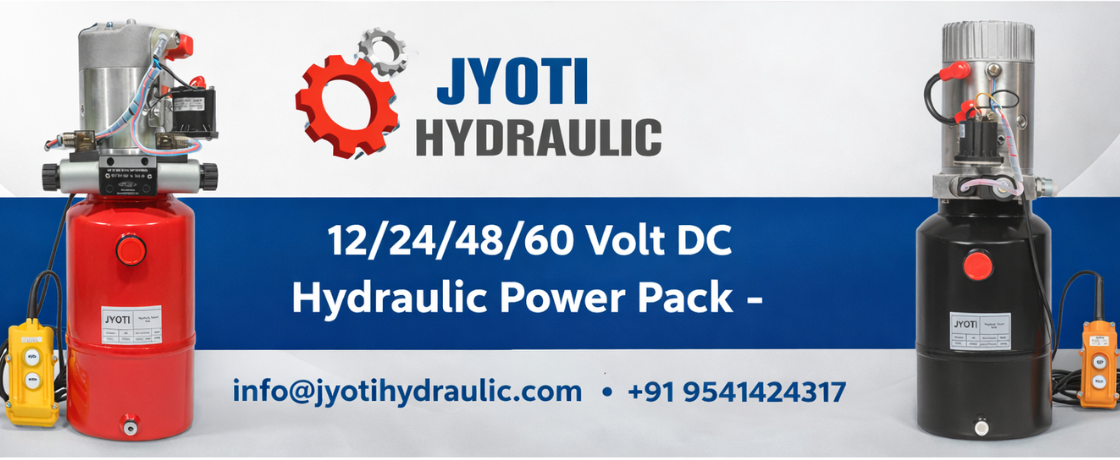
Jyoti Hydraulic manufactures compact DC hydraulic power packs for mobile equipment, industrial machines, lifting systems, commercial vehicles, and battery-operated applications. These units are available in 12V, 24V, 48V, and 60V configurations and are designed to generate hydraulic pressure where a conventional AC power supply is not practical.
A DC hydraulic power pack combines a motor, hydraulic pump, oil reservoir, valves, and control components in one compact assembly. It converts electrical energy from a battery into hydraulic power that can operate cylinders, motors, lifting platforms, tipping systems, clamps, and other hydraulic mechanisms.
Industry Overview
The use of DC hydraulic power packs is increasing due to the rapid growth of electric vehicles, warehouse equipment, mobile lifting machines, agricultural machinery, and compact construction equipment.
Earlier, 12V and 24V systems were mainly used in vehicle-mounted applications. Today, 48V and 60V power packs are also becoming common in electric forklifts, battery-operated industrial vehicles, automated material-handling systems, and high-capacity lifting equipment.
An experienced Hydraulic Power Pack Manufacturer can design the unit according to the required pressure, oil flow, motor voltage, reservoir capacity, duty cycle, mounting arrangement, and operating controls.
Main Components of a DC Hydraulic Power Pack
A typical DC hydraulic power unit includes:
- DC electric motor
- Hydraulic gear pump
- Oil reservoir
- Pressure relief valve
- Directional control valve
- Suction and return filters
- Solenoid valve
- Electrical relay or contactor
- Remote pendant or control switch
- Hydraulic ports and fittings
The motor drives the pump, while the pump draws oil from the reservoir and sends it to the hydraulic actuator under pressure.
How Does It Work?
When the operator activates the control switch, electrical power from the battery starts the DC motor. The motor rotates the hydraulic pump, which draws oil from the tank and creates hydraulic flow.
The pressurized oil passes through the control valve and enters the hydraulic cylinder. This pressure moves the cylinder piston and performs the required task, such as lifting, tilting, pushing, pulling, or clamping.
Once the operation is complete, the oil returns to the reservoir. A pressure relief valve protects the system by releasing excess pressure if the operating limit is exceeded.
Difference Between 12V, 24V, 48V and 60V Power Packs
12 Volt DC Hydraulic Power Pack
A 12 Volt DC Hydraulic Power Pack is suitable for light and medium-duty applications using a standard vehicle battery.
Common uses include:
- Small dump trailers
- Pickup truck tail lifts
- Recovery vehicles
- Agricultural attachments
- Portable lifting equipment
It is compact, economical, and easy to install.
24 Volt DC Hydraulic Power Pack
A 24V power pack is generally preferred for commercial vehicles and applications requiring more power. It draws less current than a 12V system for the same output, helping reduce cable heating and voltage loss.
It is commonly used in:
- Truck tippers
- Mobile cranes
- Tail lifts
- Municipal vehicles
- Work platforms
48 Volt DC Hydraulic Power Pack
A 48V unit is ideal for battery-operated industrial machines and electric material-handling equipment.
Typical applications include:
- Electric forklifts
- Warehouse vehicles
- Scissor lifts
- Automated handling systems
- Electric utility vehicles
Higher voltage allows lower current consumption, improved efficiency, and better battery performance.
60 Volt DC Hydraulic Power Pack
A 60V power pack is used where higher hydraulic output is required from an electric platform. It is suitable for heavy-duty lifting machines, specialized electric vehicles, and high-capacity mobile hydraulic equipment.
Major Applications
DC hydraulic power packs are widely used in:
- Tipper trucks and dump trailers
- Hydraulic tail lifts
- Scissor lifts
- Dock levelers
- Car recovery equipment
- Wheelchair lifts
- Agricultural machinery
- Material-handling systems
- Compact presses
- Electric vehicles
- Mobile maintenance equipment
- Industrial clamping systems
Benefits
The main advantages of DC hydraulic power packs include:
- Compact and space-saving construction
- Operation without mains electricity
- Easy installation on mobile equipment
- Reliable pressure and flow output
- Low maintenance requirements
- Availability in multiple voltage options
- Customizable valve and control arrangements
- Suitable for remote and outdoor use
Buying Guide and Selection Tips
Before selecting a hydraulic power pack, consider the following factors:
Required Pressure
The operating pressure must be sufficient to generate the required cylinder force.
Pump Flow
Flow rate determines the speed of cylinder extension and retraction.
Battery Voltage
The motor voltage must match the equipment’s electrical system.
Duty Cycle
Frequent or continuous operation requires a motor and reservoir designed to control heat generation.
Reservoir Capacity
The tank must hold enough oil for complete cylinder movement and proper cooling.
Control Type
Depending on the application, the unit may use manual controls, wired remotes, wireless controls, or solenoid-operated valves.
Customization
Choose a reliable Hydraulic Power Pack Manufacturer that can customize the unit according to load, speed, space, mounting, and operating conditions.
Future Trends
The future of DC hydraulic systems is moving towards brushless motors, intelligent electronic controls, variable-speed pumps, remote monitoring, energy-efficient circuits, and integration with battery management systems.
These improvements will reduce energy consumption, improve equipment life, and support the growing demand for electric and automated machinery.
Conclusion
A 12V, 24V, 48V, or 60V DC hydraulic power pack provides a practical way to operate hydraulic equipment using battery power. The correct voltage depends on the load, duty cycle, required pressure, operating speed, and available electrical system.
Proper technical selection improves performance, reduces battery consumption, and extends the life of the motor, pump, and hydraulic components.
Frequently Asked Questions
What is a DC hydraulic power pack?
It is a compact hydraulic unit powered by a DC motor that converts battery energy into hydraulic pressure.
Where is a 12 Volt DC Hydraulic Power Pack used?
It is commonly used in dump trailers, recovery vehicles, tail lifts, agricultural equipment, and small lifting systems.
Is 24V better than 12V?
A 24V system usually draws less current and is better suited for heavier loads and longer operating cycles.
Why are 48V and 60V systems used?
They provide improved electrical efficiency and are suitable for electric vehicles, industrial lifting equipment, and battery-operated machinery.
Can a hydraulic power pack be customized?
Yes. Motor voltage, pump flow, pressure, reservoir capacity, valves, and controls can be customized according to the application.
Get the Right Hydraulic Power Pack for Your Application
Contact Jyoti Hydraulic for product selection, customized hydraulic power pack design, technical consultation, or a competitive quotation.
📧 Email: info@jyotihydraulic.com
📞 Phone: +91 9541424317
Speak with our experts today to select the right 12V, 24V, 48V, or 60V DC hydraulic power pack for your equipment.


