
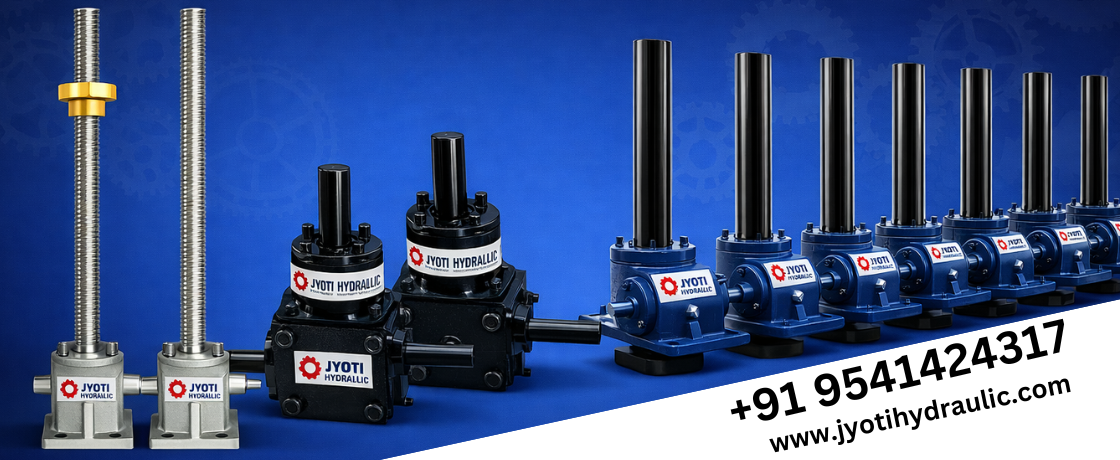
Jyoti Hydraulic has built its reputation on precision engineering, consistent performance, and uncompromising quality in power transmission solutions. In today’s competitive industrial landscape, simply manufacturing a durable product is not enough—systematic quality control, traceability, and continuous improvement are essential. This is where ISO 9001 standards play a decisive role, especially in the manufacturing of a Worm Gear Screw Jack, a component widely used for lifting, positioning, and load-holding applications across multiple industries. This in-depth blog explains why ISO 9001 matters, how it impacts quality control, and why customers increasingly prefer ISO-certified manufacturers for mission-critical applications.
Understanding ISO 9001 and Its Relevance to Mechanical Manufacturing
ISO 9001 is an internationally recognized Quality Management System (QMS) standard that defines how organizations should manage processes to consistently meet customer and regulatory requirements. In mechanical and hydraulic manufacturing, ISO 9001 is not just a certification badge—it is a structured framework that governs every stage of production, from raw material sourcing to final inspection and after-sales feedback.
For manufacturers of heavy-duty mechanical equipment like worm gear screw jacks, ISO 9001 ensures that:
-
Processes are documented and repeatable
-
Risks are identified and mitigated in advance
-
Product quality is consistent across batches
-
Continuous improvement is embedded into daily operations
This structured approach is especially critical where safety, load accuracy, and long service life are non-negotiable.
Why Quality Control Is Critical in a Worm Gear Screw Jack
A Worm Gear Screw Jack is a precision lifting device designed to convert rotary motion into linear movement. It is commonly used in:
-
Material handling systems
-
Steel and cement plants
-
Automotive and aerospace fixtures
-
Power plants and infrastructure projects
Any deviation in machining accuracy, gear alignment, or material strength can lead to operational inefficiency, premature wear, or even catastrophic failure. That is why quality control must go beyond visual inspection and be embedded into every manufacturing step.
ISO 9001 provides a systematic way to control:
-
Dimensional tolerances of worm shafts and gears
-
Load-bearing capacity and safety factors
-
Surface finish and heat treatment consistency
-
Assembly accuracy and lubrication practices
How ISO 9001 Improves Design and Engineering Control
One of the most overlooked benefits of ISO 9001 is its impact on design and engineering. Under ISO guidelines, design inputs, calculations, and validations must be documented and reviewed. This ensures that each worm gear screw jack design:
-
Meets application-specific load and duty cycle requirements
-
Is verified through calculations and testing
-
Complies with relevant industrial norms and customer specifications
For Worm Gear Screw Jack Manufacturers, this means fewer design errors, reduced rework, and higher confidence in real-world performance. Engineering changes are also controlled through formal change management, preventing unauthorized or undocumented modifications.
Material Selection and Supplier Quality Management
The performance of a worm gear screw jack heavily depends on material quality—especially for components like the worm wheel, worm shaft, housing, and lifting screw. ISO 9001 mandates strict supplier evaluation and approval processes.
This includes:
-
Qualification of raw material suppliers
-
Incoming material inspection and testing
-
Traceability of materials to heat numbers and certificates
For Worm Gear Screw Jack Manufacturers in India, ISO 9001 acts as a benchmark that aligns local manufacturing with global quality expectations, making Indian-made products competitive in international markets.
Precision Machining and Process Control
ISO 9001 emphasizes process control and monitoring, which is essential for precision machining operations such as:
-
Gear hobbing and grinding
-
Thread rolling or cutting
-
Bore alignment and housing machining
Under an ISO-compliant system:
-
CNC programs are validated and controlled
-
Machines are calibrated at defined intervals
-
In-process inspections are recorded and analyzed
This level of discipline ensures that every Worm Gear Screw Jack meets dimensional accuracy requirements and delivers smooth, reliable operation under load.
Assembly Standards and Functional Testing
Assembly is a critical phase where even minor errors can affect performance. ISO 9001 requires standardized assembly procedures, trained personnel, and defined inspection checkpoints.
Key quality control measures include:
-
Correct gear meshing and backlash adjustment
-
Proper bearing fitment and lubrication
-
Load testing under simulated operating conditions
Functional testing is not optional—it is a documented requirement. Each unit must be verified for lifting capacity, efficiency, and self-locking behavior where applicable.
Documentation, Traceability, and Accountability
One of the strongest advantages of ISO 9001 is documentation and traceability. Every worm gear screw jack produced under an ISO system can be traced back to:
-
Raw material batches
-
Machining and assembly records
-
Inspection and test reports
This traceability is invaluable for customers operating in regulated industries such as power generation, defense, and infrastructure. It ensures accountability and simplifies maintenance, audits, and replacements.
Continuous Improvement and Customer Feedback Integration
ISO 9001 is not a one-time certification—it is a living system. Manufacturers are required to:
-
Analyze customer feedback and complaints
-
Identify root causes of non-conformities
-
Implement corrective and preventive actions
For Worm Gear Screw Jack Manufacturers, this results in progressive improvements in product design, durability, and ease of maintenance. Over time, this continuous improvement cycle leads to higher reliability and longer service life.
Competitive Advantage for ISO-Certified Manufacturers
In a crowded market, ISO 9001 certification clearly differentiates quality-focused manufacturers from generic suppliers. Customers increasingly prefer working with certified partners because it reduces risk, improves consistency, and ensures long-term value.
For Worm Gear Screw Jack Manufacturers in India, ISO 9001 opens doors to:
-
Export opportunities
-
Large-scale EPC and OEM projects
-
Long-term industrial contracts
It also builds trust with engineers, procurement teams, and end users who prioritize quality assurance.
Why ISO 9001 Matters to End Users
From the customer’s perspective, ISO 9001 compliance means:
-
Predictable performance under rated loads
-
Reduced downtime and maintenance costs
-
Higher safety margins in critical applications
-
Confidence in after-sales support and documentation
When a worm gear screw jack is used in synchronized lifting or heavy structural positioning, reliability is not optional—it is essential.
Conclusion
ISO 9001 standards play a vital role in ensuring consistent quality, safety, and performance in worm gear screw jack manufacturing. By enforcing disciplined processes, rigorous inspections, and continuous improvement, ISO 9001 transforms quality control from a reactive activity into a proactive system. Jyoti Hydraulic follows these principles to deliver robust, precision-engineered solutions that meet demanding industrial requirements.
For customers seeking long-term reliability and assured performance, choosing an ISO-certified manufacturer is not just a preference—it is a strategic decision. In the world of industrial lifting and positioning, ISO 9001 is the foundation of trust, quality, and engineering excellence.


