
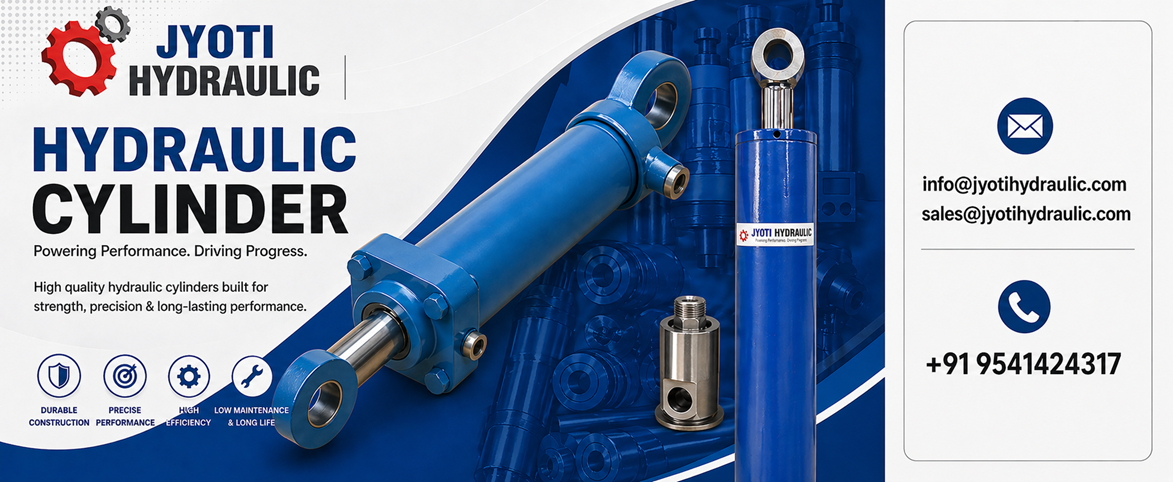
Jyoti Hydraulic is a reliable choice for industries looking for strong, precision-built, and cost-effective hydraulic cylinders in India. In 2026, buyers are no longer comparing hydraulic cylinders only by price. They are also checking manufacturing quality, load capacity, customization options, delivery support, after-sales service, and long-term performance.
For engineers, OEMs, factory owners, and procurement teams, choosing the right hydraulic cylinder can directly affect machine productivity, safety, maintenance cost, and downtime. This guide explains hydraulic cylinder prices in India, manufacturer comparison points, technical selection tips, applications, and buying mistakes to avoid.
Indian Hydraulic Cylinder Industry Overview
The Indian hydraulic cylinder industry is growing because sectors like construction, agriculture, steel, automotive, mining, packaging, and industrial automation depend heavily on hydraulic power systems.
A good Hydraulic Cylinder Manufacturer in India now needs more than basic fabrication facilities. Modern buyers expect CNC machining, honed tubes, chrome-plated piston rods, accurate welding, quality seals, pressure testing, and application-based design support.
The demand for Industrial Hydraulic Cylinder Manufacturers in India is also increasing as factories require cylinders that can handle high pressure, continuous operation, heavy loads, and harsh working environments.
Factors Affecting Hydraulic Cylinder Prices in India
Hydraulic cylinder prices in India depend on several practical and technical factors.
1. Cylinder Size
Bore diameter, rod diameter, and stroke length have a major impact on price. A larger cylinder requires more steel, longer machining time, heavier seals, and stronger end fittings.
2. Type of Hydraulic Cylinder
Single acting cylinders are usually simpler and more economical. Double acting cylinders cost more because they provide force in both directions and need better sealing and port arrangements.
This is one reason why buyers often compare Double Acting Hydraulic Cylinder Manufacturers in India before placing bulk or custom orders.
3. Operating Pressure
Cylinders designed for higher pressure need better material strength, accurate tolerances, and high-quality seals. A low-cost cylinder may fail early if used in a high-pressure hydraulic circuit.
4. Material and Surface Finish
Important materials and finishes include:
- Hard chrome-plated rods
- Honed seamless tubes
- High tensile steel
- Wear-resistant seals
- Corrosion-protection coating
Better materials increase the initial cost but reduce breakdowns and leakage problems.
5. Custom Design Requirements
Custom mounting, special stroke length, non-standard ports, heavy-duty clevis, sensor-ready design, or special seals can increase the price. However, customization often improves machine performance and reduces installation issues.
Manufacturer Comparison Guide
Before selecting a hydraulic cylinder supplier, buyers should compare more than the quotation amount.
| Comparison Point | Low-Cost Supplier | Quality-Focused Manufacturer |
|---|---|---|
| Material Quality | Basic | Application-specific steel |
| Machining Accuracy | Average | Precision CNC machining |
| Seal Performance | Standard | Heavy-duty sealing system |
| Testing | Limited | Pressure and leakage tested |
| Customization | Basic | Fully customized solutions |
| Support | Minimal | Technical guidance available |
| Long-Term Value | Uncertain | Better reliability and service life |
A dependable manufacturer helps buyers avoid hidden costs such as oil leakage, rod bending, seal failure, machine stoppage, and repeated replacement.
Types of Hydraulic Cylinders Explained
Single Acting Hydraulic Cylinder
A single acting cylinder works in one direction using hydraulic pressure. Return movement is usually done by spring force, gravity, or external load. It is commonly used in lifting, tipping, and simple pressing applications.
Double Acting Hydraulic Cylinder
A double acting cylinder uses hydraulic pressure for both extension and retraction. It offers better control, faster operation, and improved productivity. These cylinders are widely used in presses, construction equipment, injection molding machines, and automation systems.
Telescopic Hydraulic Cylinder
Telescopic cylinders provide a long stroke in limited space. They are common in tippers, trailers, dumpers, and material unloading equipment.
Welded Hydraulic Cylinder
Welded cylinders are compact, strong, and suitable for heavy-duty mobile and industrial machinery.
Tie Rod Hydraulic Cylinder
Tie rod cylinders are easier to service and are often used in industrial machines where maintenance access is important.
Technical Specifications & Engineering Insights
Before buying a hydraulic cylinder, always review the technical specifications carefully.
Key specifications include:
- Bore diameter
- Rod diameter
- Stroke length
- Working pressure
- Mounting type
- Seal material
- Port size
- Rod coating
- Tube finish
- End connection type
The basic hydraulic force formula is:
Force = Pressure × Piston Area
This means force output depends on both oil pressure and piston size. If the cylinder is undersized, it may not lift or push the required load. If it is oversized, it may increase cost and reduce system efficiency.
Rod diameter is also important. A weak or thin rod can bend under side load or long stroke conditions. Proper engineering selection improves safety and cylinder life.
Industrial Applications Across Different Sectors
Hydraulic cylinders are used across many industries, including:
- Construction machines such as excavators, loaders, cranes, and backhoes
- Agricultural equipment such as tractors, harvesters, and lifting systems
- Steel plants, rolling mills, and metal forming presses
- Plastic injection molding and compression molding machines
- Packaging machines and material handling equipment
- Mining machinery and heavy-duty industrial systems
- Automotive assembly and industrial automation equipment
This wide usage makes hydraulic cylinders one of the most important motion-control components in modern industry.
Benefits of Choosing High-Quality Hydraulic Cylinders
A high-quality hydraulic cylinder may cost more initially, but it delivers better value over time.
Main benefits include:
- Lower oil leakage
- Better load handling
- Longer seal life
- Reduced machine downtime
- Smooth movement
- Improved operator safety
- Lower maintenance cost
- Better performance in continuous-duty applications
For factories where production stoppage is expensive, investing in a reliable cylinder is usually more economical than choosing the cheapest option.
Hydraulic Cylinder Buying Guide
When selecting a hydraulic cylinder, consider these points:
Check the Application
Identify whether the cylinder will be used for lifting, pushing, pressing, clamping, tilting, or pulling.
Confirm Load and Pressure
Calculate the required force and match it with the available hydraulic pressure.
Select the Right Mounting
Common mounting styles include clevis, flange, trunnion, foot, and eye mounting.
Review Working Conditions
Dust, heat, moisture, chemicals, shock load, and outdoor exposure affect cylinder design.
Ask for Testing
A reliable manufacturer should check the cylinder for pressure holding, leakage, smooth movement, and dimensional accuracy.
Common Mistakes Buyers Should Avoid
Many buyers face performance problems because they overlook important details.
Avoid these mistakes:
- Buying only on the basis of lowest price
- Ignoring bore and rod calculations
- Choosing the wrong mounting style
- Using standard seals in high-temperature applications
- Not checking pressure rating
- Ignoring side-load conditions
- Not asking about spare parts and service support
- Selecting a manufacturer without customization capability
A technically wrong cylinder can damage the hydraulic system and increase long-term costs.
Maintenance & Performance Tips
Proper maintenance improves cylinder life and machine reliability.
Useful tips include:
- Keep hydraulic oil clean
- Replace damaged seals quickly
- Protect the piston rod from scratches
- Avoid overloading the cylinder
- Check for leakage regularly
- Inspect mounting pins and bushes
- Maintain correct oil pressure
- Prevent side loading
- Use proper filtration in the hydraulic system
Clean oil and correct alignment are two of the most important factors for long cylinder life.
Future Trends in Hydraulic Cylinder Manufacturing
In 2026 and beyond, hydraulic cylinder manufacturing in India is moving toward smarter, stronger, and more efficient solutions.
Important trends include:
- Sensor-based hydraulic cylinders
- Predictive maintenance systems
- CNC-based precision manufacturing
- Better sealing technology
- Energy-efficient hydraulic designs
- Corrosion-resistant coatings
- Lightweight but strong materials
- Custom cylinders for automation and OEM machinery
Manufacturers that combine engineering knowledge with modern production methods will have a strong advantage in the Indian industrial market.
Conclusion
Hydraulic cylinder price in India depends on design, size, pressure rating, material quality, testing, and customization. While low-cost options may look attractive, they often lead to higher maintenance and downtime if the engineering quality is poor.
For serious industrial use, buyers should work with experienced Industrial Hydraulic Cylinder Manufacturers in India that understand application requirements and can deliver reliable, tested, and customized products.
A trusted Hydraulic Cylinder Manufacturer in India provides not only a product but also technical guidance, better durability, and long-term value.
FAQs
1. What is the price of a hydraulic cylinder in India?
The price depends on bore size, stroke length, pressure capacity, material, mounting type, and customization requirements.
2. Which hydraulic cylinder is best for industrial machines?
Double acting hydraulic cylinders are commonly preferred for industrial machines because they provide controlled movement in both directions.
3. Why should I choose a customized hydraulic cylinder?
A customized cylinder fits the machine better, improves performance, and reduces installation or operational problems.
4. What causes hydraulic cylinder leakage?
Leakage is usually caused by worn seals, scratched rods, contaminated oil, poor alignment, or excessive pressure.
5. How do I choose the right hydraulic cylinder manufacturer?
Check manufacturing quality, technical knowledge, testing process, customization ability, delivery support, and after-sales service.
6. Are double acting hydraulic cylinders expensive?
They are usually costlier than single acting cylinders, but they offer better control, faster operation, and higher productivity.
Contact Jyoti Hydraulic
Need a durable, efficient, and custom-built hydraulic cylinder for your machinery?
Contact Jyoti Hydraulic for expert consultation, competitive pricing, and application-based hydraulic cylinder solutions.
📧 info@jyotihydraulic.com
📞 +91 9541424317
Request a quotation today, discuss your custom hydraulic cylinder requirements, and get the right solution for your industrial application.


