
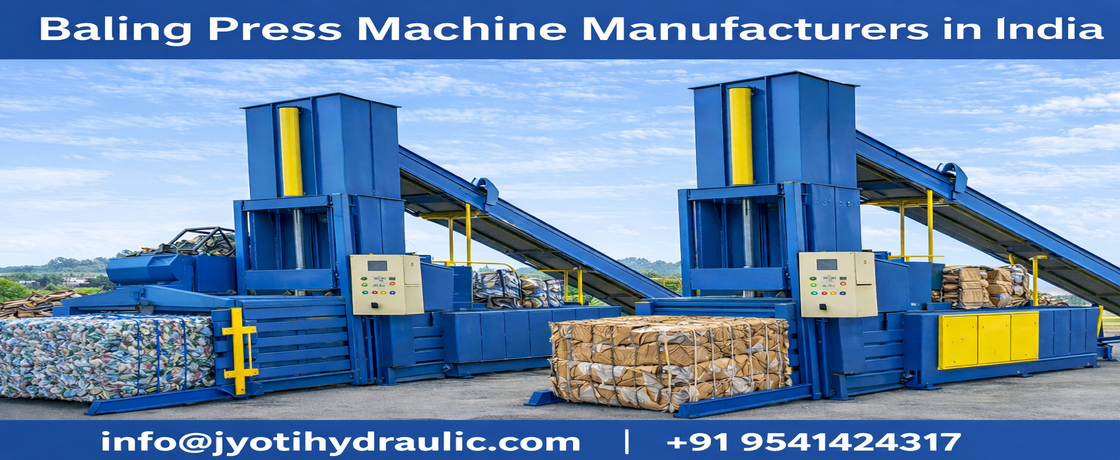
Jyoti Hydraulic is a leading name in the field of industrial hydraulic machinery, delivering robust and high-performance recycling equipment designed for modern industrial needs. Among the most widely used waste management solutions in the recycling industry is the Industrial Front Opening Baling Press Machine, a powerful hydraulic system designed to compress large volumes of recyclable materials into dense, manageable bales.
With industries generating increasing amounts of packaging waste, plastic scrap, cardboard, and metal residues, efficient waste handling has become a priority. This is where advanced baling machines play a crucial role. High-capacity baling systems not only improve material handling efficiency but also significantly reduce storage and transportation costs.
Today, several Baling Machine Manufacturers in India are developing technologically advanced machines capable of handling heavy-duty industrial waste with improved energy efficiency and operational safety. Whether it is recycling facilities, warehouses, textile mills, plastic processing units, or logistics hubs, the demand for high-quality baling equipment continues to grow.
An Industrial Front Opening Baling Press Machine is particularly popular due to its ergonomic design, easy bale removal, and ability to handle various recyclable materials including PET bottles, cardboard cartons, plastic films, aluminum cans, and textile waste. Companies such as Jyoti Hydraulic are at the forefront of delivering reliable and durable machines that meet global recycling standards.
Industry Overview: Growing Demand for Baling Machines
The global recycling and waste management industry has evolved rapidly over the past decade. Environmental awareness, government regulations, and the growing concept of circular economy have forced industries to adopt systematic waste processing solutions.
In India, sectors such as manufacturing, packaging, logistics, FMCG, retail, and plastic processing produce large quantities of recyclable waste daily. Without proper waste management infrastructure, handling such materials becomes inefficient and costly.
This is where modern hydraulic baling machines have become essential equipment.
Many Scrap Baling Machine Manufacturers in India are focusing on designing machines that offer higher compression force, faster cycle time, and minimal maintenance. These machines help industries reduce waste volume by up to 80–90%, which significantly improves storage management and transportation efficiency.
Additionally, plastic recycling has become a major industry segment. With millions of PET bottles being discarded daily, PET Bottle Baling Press Machine Manufacturers in India are providing machines that help recycling facilities compress plastic bottles into dense bales for easier processing.
The increasing demand for recycling equipment is also driven by:
-
Government initiatives promoting waste recycling
-
Rising raw material costs encouraging scrap reuse
-
Environmental sustainability programs
-
Industrial waste management compliance requirements
Because of these factors, the baling machine industry in India is expected to grow significantly in the coming years.
Understanding the Industrial Front Opening Baling Press Machine
An Industrial Front Opening Baling Press Machine is a hydraulic compression machine specifically designed to compact loose scrap materials into dense rectangular or square bales. These machines use high-pressure hydraulic cylinders to compress materials placed inside the chamber.
The unique feature of this machine is its front-opening door design, which allows easy removal of compressed bales after the baling process is completed.
The typical working cycle includes:
-
Loading scrap material into the chamber
-
Hydraulic ram compressing the material
-
Repeated compression cycles to increase density
-
Bale tying using steel wires or plastic straps
-
Opening the front door and removing the bale
This design ensures efficient operation while maintaining operator safety.
Technical Insights: Engineering Behind Baling Machines
Industrial baling machines are sophisticated mechanical systems designed with precision engineering to withstand heavy compression forces and continuous operation.
Heavy-Duty Structural Frame
The machine body is constructed using thick mild steel plates or structural steel sections, ensuring strength and durability. The structure must withstand high pressure during compression without deformation.
Key structural features include:
-
Reinforced side plates
-
Cross-support beams
-
Heavy base frame
-
Wear-resistant chamber lining
A strong frame ensures long machine life and consistent performance.
Hydraulic Power Pack
The hydraulic system is the core component responsible for generating compression force. It consists of:
-
Hydraulic pump
-
Oil reservoir
-
Direction control valves
-
Pressure relief valves
-
Hydraulic cylinders
Industrial balers typically operate with pressures ranging from 150 bar to 300 bar, depending on the machine capacity.
High-quality hydraulic systems ensure:
-
Smooth operation
-
High compression efficiency
-
Low energy consumption
-
Reduced maintenance requirements
Compression Cylinder and Ram
The hydraulic cylinder and ram assembly applies pressure on the material inside the chamber.
Important specifications include:
-
Cylinder bore size
-
Stroke length
-
Compression force capacity
-
Ram plate thickness
Machines may generate compression forces between 40 tons to 200 tons, depending on the design and application.
Chamber Design
The compression chamber plays a critical role in determining the bale size and density.
Typical chamber sizes may range from:
-
30 x 20 x 40 inches for small machines
-
40 x 30 x 60 inches for medium machines
-
60 x 40 x 80 inches for heavy-duty industrial machines
The chamber must be designed with proper guide rails and anti-friction surfaces to ensure smooth ram movement.
Electrical Control System
Modern baling machines use advanced electrical control panels for efficient machine operation.
Features may include:
-
PLC-based automation
-
Pressure monitoring systems
-
Cycle timers
-
Emergency stop switches
-
Overload protection
Automation improves productivity and ensures consistent bale quality.
Applications of Industrial Front Opening Baling Machines
These machines are used in numerous industries where waste materials need to be compacted efficiently.
Plastic Recycling Plants
Plastic bottles, PET containers, and plastic films are compressed into dense bales before being transported to recycling facilities.
Packaging Industry
Large amounts of cardboard and paper waste are generated in packaging units. Baling machines help reduce storage space.
Textile Industry
Textile mills produce fabric cuttings and cotton waste that can be compressed into bales for resale or recycling.
Scrap Processing Facilities
Industrial scrap such as aluminum cans, copper scrap, and thin metal sheets can be compacted using heavy-duty baling presses.
Warehouses and Logistics Centers
Retail distribution centers generate packaging waste that must be managed efficiently.
Key Benefits of Using Industrial Baling Press Machines
Significant Volume Reduction
Baling machines can reduce scrap volume by up to 90%, allowing industries to store more material in less space.
Improved Recycling Efficiency
Compressed bales are easier to transport and process in recycling plants.
Increased Scrap Value
Well-packed bales often receive higher market prices from recycling buyers.
Better Workplace Organization
Loose scrap materials can create clutter and safety hazards. Baling machines help maintain cleaner workplaces.
Lower Logistics Costs
Compact bales reduce the number of truckloads required for transportation.
Buying Guide: Selecting the Right Baling Machine
Choosing the correct baling machine is essential for long-term operational efficiency.
Evaluate Material Type
Different materials require different compression forces. Plastic, cardboard, and metal scrap have different density characteristics.
Consider Bale Weight
Industries must determine the ideal bale size for transportation and recycling.
Machine Capacity
Choose machines that match daily scrap generation volume.
Automation Level
Semi-automatic machines are suitable for small industries, while large recycling plants benefit from automated systems.
Manufacturer Expertise
Reliable Baling Machine Manufacturers in India provide better technical support, customization options, and spare parts availability.
Future Trends in Baling Machine Technology
The baling machine industry is evolving with several technological advancements.
Smart Hydraulic Systems
Energy-efficient hydraulic systems reduce power consumption while maintaining high compression force.
IoT-Based Monitoring
Future machines may include remote monitoring features that track machine performance and maintenance schedules.
Integration with Recycling Lines
Automated recycling plants integrate shredders, conveyors, and balers for continuous waste processing.
Eco-Friendly Machine Design
Manufacturers are focusing on machines that support sustainable industrial practices.
Conclusion
Industrial waste management has become a critical component of modern manufacturing and recycling industries. The Industrial Front Opening Baling Press Machine plays a key role in transforming loose waste materials into compact, transportable bales that improve recycling efficiency and reduce operational costs.
With increasing demand for sustainable waste management systems, industries are actively investing in advanced baling equipment. Reliable Scrap Baling Machine Manufacturers in India are continuously innovating to deliver machines that offer durability, efficiency, and safety.
Whether it is plastic recycling, packaging waste management, textile scrap handling, or industrial waste processing, a high-quality baling press machine ensures smoother operations and better resource utilization.
Frequently Asked Questions (FAQ)
What is the difference between vertical and horizontal baling machines?
Vertical baling machines compress materials vertically and are suitable for small to medium industries, while horizontal balers handle large volumes and are used in automated recycling plants.
What materials can be compressed using a baling machine?
Materials include PET bottles, plastic films, cardboard, paper waste, aluminum cans, textile waste, and industrial scrap.
What is the typical bale density achieved in baling machines?
Bale density varies depending on material type and machine pressure but can range between 300 kg/m³ to 700 kg/m³.
How long does a baling machine last?
A well-maintained industrial baling machine can operate efficiently for 10–20 years.
How much power does a baling machine require?
Industrial machines typically use 10 HP to 40 HP motors, depending on compression capacity.
Get Expert Consultation for Industrial Baling Machines
If you are looking for reliable PET Bottle Baling Press Machine Manufacturers in India or want a customized Industrial Front Opening Baling Press Machine, our team at Jyoti Hydraulic is ready to assist you.
We specialize in manufacturing high-performance hydraulic baling machines designed for industrial durability, efficiency, and long service life.
📧 Email: info@jyotihydraulic.com
📞 Call: +91 9541424317
Contact us today to request a quotation, discuss your project requirements, or get expert guidance on selecting the right baling machine for your industry.


