
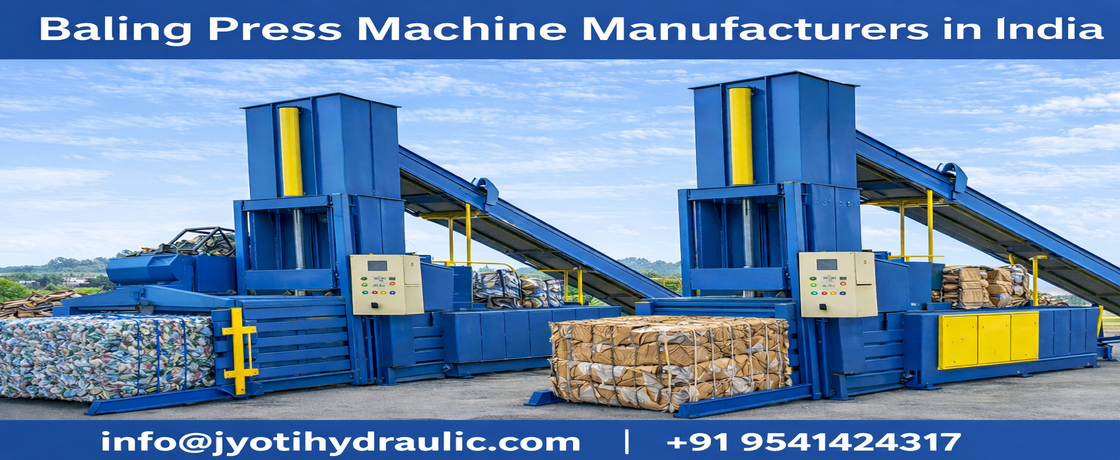
Jyoti Hydraulic is recognized for delivering robust, performance-driven hydraulic machinery designed to simplify industrial scrap handling and improve operational productivity. In today’s fast-moving manufacturing environment, metal scrap is not merely waste—it is a valuable recyclable resource that must be processed efficiently, safely, and economically. An iron scrap press machine plays a crucial role in this process by compressing loose iron and ferrous metal scrap into compact, dense, easy-to-handle bales.
Industries that generate iron scrap often face challenges such as high storage requirements, unsafe working spaces, expensive transportation, and inefficient recycling preparation. An iron scrap press machine, also commonly known as an iron scrap baling machine or scrap baling press, solves these issues by converting bulky scrap into uniform bundles. These bales are easier to store, load, transport, sell, and melt in furnaces.
As one of the trusted names among Iron Scrap Baling Machine Manufacturers in India, Jyoti Hydraulic focuses on manufacturing machines that combine hydraulic power, structural strength, user-friendly operation, and long service life. From small fabrication units to large recycling yards and steel plants, iron scrap press machines have become a necessary investment for businesses aiming to reduce costs, improve material recovery, and support sustainable industrial practices.
Industry Overview: Scrap Management in Modern Industries
Scrap management has become an essential part of industrial operations. With growing production volumes in sectors such as steel, automobile, construction, fabrication, shipbreaking, foundries, railways, and engineering workshops, the quantity of iron and metal scrap generated daily is significant. Managing this scrap manually is time-consuming, labor-intensive, and often unsafe.
Modern industries are under constant pressure to optimize space, reduce logistics costs, follow environmental norms, and improve recycling efficiency. Scrap baling machines support these goals by making scrap compact and commercially valuable. Instead of transporting loose, irregular, and low-density scrap, industries can move compressed bales that occupy less volume and provide better load utilization.
The demand for reliable Scrap Baling Machine Manufacturers in India has increased because businesses are now looking beyond basic scrap disposal. They want complete scrap handling solutions that improve productivity and profitability. A well-designed iron scrap press machine can reduce handling time, improve shop floor cleanliness, and create a streamlined workflow between scrap generation, storage, transportation, and recycling.
In India, the recycling industry is expanding rapidly due to increased metal consumption, rising raw material costs, and stronger awareness of circular economy practices. Iron scrap is a valuable input for steel re-rolling mills, foundries, induction furnace units, and metal recycling plants. This makes scrap compaction machinery an important link in the industrial supply chain.
Technical Insights: How an Iron Scrap Press Machine Works
An iron scrap press machine works on the principle of hydraulic compression. Loose iron scrap is placed into a compression chamber, where powerful hydraulic cylinders apply controlled force from one or multiple directions. This force compresses the scrap into a dense bale of predefined size and shape.
The process usually involves four major stages: feeding, compression, holding, and bale ejection. First, scrap is loaded manually, by conveyor, grabber, or crane, depending on the machine design and production requirement. Once the chamber is filled, the hydraulic system activates the pressing ram. The ram moves with high force, compacting the scrap against the chamber walls. In some machines, compression occurs from two or three sides to create higher-density bales. After the bale reaches the required density, the machine ejects it for stacking, storage, or transport.
The hydraulic power pack is the heart of the system. It includes the motor, hydraulic pump, oil tank, valves, filters, hoses, and control mechanisms. The hydraulic pump converts mechanical power into hydraulic pressure, while control valves regulate the direction, speed, and pressure of the cylinders. Strong fabrication, accurate alignment, and quality hydraulic components are essential for consistent performance.
As experienced Baling Press Machine Manufacturers, Jyoti Hydraulic understands that machine reliability depends on more than pressing force alone. The design must consider frame strength, chamber size, oil cooling, cylinder durability, electrical control safety, easy maintenance access, and operator convenience.
Key Components and Specifications
A high-quality iron scrap press machine generally consists of the following components:
1. Heavy-Duty Main Frame
The main frame bears the entire compression load. It must be made from strong steel plates and reinforced sections to withstand repeated high-pressure operation. A rigid frame reduces vibration, improves bale quality, and extends machine life.
2. Hydraulic Cylinders
Hydraulic cylinders provide the pressing force required to compress scrap. Depending on the machine type, there may be a main pressing cylinder, side pressing cylinder, lid cylinder, and bale ejection cylinder. Cylinder bore, stroke length, sealing quality, and rod strength directly affect performance.
3. Hydraulic Power Pack
The power pack includes the motor, pump, oil reservoir, manifold, valves, filters, pressure gauge, and cooling arrangement. It controls the pressure and movement of the machine. Properly designed hydraulic systems ensure smooth operation and lower energy consumption.
4. Compression Chamber
The chamber is where loose scrap is converted into compact bales. Chamber dimensions determine bale size and feed capacity. Wear-resistant surfaces and proper reinforcement are important because iron scrap can be sharp, heavy, and abrasive.
5. Electrical Control Panel
The control panel may include push buttons, limit switches, relays, PLC controls, emergency stop, overload protection, and automation features. Advanced machines can include semi-automatic or fully automatic operating modes.
6. Bale Ejection System
After compression, the finished bale must be removed safely and efficiently. Ejection systems may use hydraulic pushers, tilting mechanisms, or discharge doors, depending on machine design.
Common Technical Specifications
Although specifications vary by model and application, buyers usually evaluate:
- Pressing force capacity
- Bale size and bale weight
- Motor power
- Chamber size
- Cycle time
- Production output per hour
- Hydraulic pressure
- Automation level
- Feeding and discharge method
- Machine weight and installation area
Selecting the correct specifications is critical because underpowered equipment may slow production, while oversized equipment may increase investment and energy costs unnecessarily.
Types of Iron Scrap Press Machines
Different industries require different scrap compaction solutions. The most suitable machine depends on scrap type, volume, space, labor availability, and required bale density.
1. Manual Iron Scrap Press Machine
Manual machines are suitable for small workshops, fabrication units, and low-volume scrap generators. They are economical, simple to operate, and require limited maintenance. Operators manually load the scrap and control the compression cycle.
2. Semi-Automatic Scrap Baling Machine
Semi-automatic machines offer improved productivity with partial automation in pressing and bale ejection. They are suitable for medium-scale industries that need higher output without investing in fully automatic systems.
3. Fully Automatic Scrap Baling Press
Fully automatic machines are designed for large recycling yards, steel processing plants, and high-volume scrap handling operations. These machines can include PLC control, conveyor feeding, automatic compression cycles, and efficient discharge systems.
4. Single-Action Baling Press
A single-action press compresses scrap from one direction. It is suitable for relatively light scrap and applications where moderate bale density is acceptable.
5. Double-Action Baling Press
Double-action machines compress scrap from two directions, improving bale density and shape. They are widely used in industrial scrap handling where storage and transport optimization are important.
6. Triple-Action Scrap Baling Machine
Triple-action machines compress scrap from three sides, producing highly dense and compact bales. These machines are ideal for heavy-duty applications, large recycling plants, foundries, and metal processors.
Applications of Iron Scrap Press Machines
Iron scrap press machines are widely used across industries where metal waste is generated during production, cutting, forming, machining, dismantling, or recycling.
Automobile Industry
Automobile manufacturing and repair units generate sheet metal scrap, stamping waste, rejected parts, and dismantled components. Baling machines help compact these materials for recycling and resale.
Steel Plants and Rolling Mills
Steel plants handle large volumes of ferrous scrap. Compressed bales are easier to feed into melting furnaces and help maintain organized raw material storage.
Foundries
Foundries use iron scrap as a raw material for melting. Baled scrap provides better handling, controlled charging, and reduced storage space.
Fabrication Workshops
Fabrication units produce cutting waste, offcuts, punched scrap, and structural steel leftovers. A compact baling press helps keep the workplace clean and reduces scrap handling effort.
Shipbreaking Yards
Shipbreaking generates heavy iron and steel scrap. Industrial-grade baling machines assist in processing scrap into transport-friendly bundles.
Recycling Centers
Scrap recycling companies rely heavily on baling presses to improve material density, reduce transportation cost, and increase resale value.
Railway and Engineering Workshops
Railway maintenance yards and engineering plants generate metal waste from repair, fabrication, and replacement activities. Scrap press machines improve material recovery and disposal efficiency.
Real-World Use Cases
A fabrication company producing iron frames, gates, and structural components may generate loose scrap daily. Without a press machine, this scrap occupies significant floor space and requires frequent manual handling. By installing an iron scrap baling machine, the company can convert scattered scrap into compact bales and reduce storage area.
A recycling yard handling mixed iron scrap may receive material from multiple suppliers. Loose scrap is difficult to stack and transport. A heavy-duty hydraulic baling press allows the yard to process scrap into uniform bales, improving truck loading efficiency and increasing profitability.
A foundry using iron scrap for melting benefits from consistent bale size and density. Baled scrap is easier to charge into furnaces compared to irregular loose scrap, improving process control and reducing material handling delays.
Benefits of Using an Iron Scrap Press Machine
1. Improved Space Utilization
Loose iron scrap consumes excessive space because of its irregular shape and low density. Baling machines reduce scrap volume significantly, allowing businesses to store more material in less area.
2. Lower Transportation Costs
Compressed bales improve vehicle load capacity. More scrap can be transported in fewer trips, reducing fuel consumption, labor cost, and logistics expenses.
3. Better Scrap Value
Well-compacted bales are easier for recyclers and steel mills to handle. Organized and dense scrap often improves commercial acceptance and may support better pricing.
4. Enhanced Workplace Safety
Loose scrap can create sharp edges, tripping hazards, and unsafe movement areas. A baling press helps maintain a cleaner and safer industrial environment.
5. Faster Material Handling
Bales can be lifted, stacked, counted, and transported more efficiently than loose scrap. This reduces manual labor and improves operational flow.
6. Sustainability and Recycling Support
Iron scrap baling promotes metal recycling and reduces dependence on virgin raw materials. This supports environmental responsibility and circular economy goals.
7. Reduced Labor Dependency
Automated and semi-automatic machines reduce manual scrap handling. Operators can process larger volumes with less physical effort.
8. Cleaner Industrial Operations
Organized scrap handling improves plant appearance, reduces clutter, and supports better compliance with workplace management standards.
Buying Guide: How to Choose the Right Iron Scrap Press Machine
Choosing the right machine requires careful evaluation of your scrap type, production volume, space, budget, and long-term operational needs. A machine should not be selected only on price. Performance, durability, service support, and suitability are equally important.
1. Assess Scrap Type
Iron scrap may include sheet metal, punching scrap, turning scrap, structural scrap, wire scrap, pipe pieces, and mixed ferrous waste. Different scrap forms require different chamber sizes and pressing forces.
2. Check Daily Scrap Volume
A small workshop may need a compact manual or semi-automatic machine, while a recycling plant may require a high-capacity triple-action hydraulic baler. Estimate daily and monthly scrap generation before selecting capacity.
3. Evaluate Pressing Force
Pressing force determines bale density. Heavy and thick iron scrap requires higher hydraulic pressure than light sheet metal scrap. Choosing insufficient force may result in loose or oversized bales.
4. Consider Automation Level
Manual machines are cost-effective but slower. Semi-automatic machines balance productivity and affordability. Fully automatic machines are suitable for high-volume operations requiring consistent output.
5. Review Bale Size Requirements
Bale dimensions should match storage, transportation, and furnace feeding requirements. Uniform bale size helps improve handling and stacking.
6. Examine Build Quality
The frame, chamber, cylinders, hydraulic system, and welding quality must be strong enough for industrial use. Iron scrap is tough and abrasive, so machine construction must be heavy-duty.
7. Check Power Consumption
Energy efficiency affects long-term operating cost. A well-designed hydraulic system delivers required force without unnecessary power loss.
8. Look for Safety Features
Emergency stop, pressure relief valves, overload protection, proper guarding, and reliable controls are important for safe operation.
9. Maintenance Accessibility
Machines should allow easy access to hydraulic oil, filters, valves, cylinders, electrical panels, and wear parts. Easy maintenance reduces downtime.
10. Manufacturer Support
Choosing experienced Iron Scrap Baling Machine Manufacturers in India ensures better technical guidance, customization, installation support, and after-sales service.
Why Jyoti Hydraulic Is a Reliable Choice
Jyoti Hydraulic focuses on practical engineering, durable construction, and customer-specific solutions. Industrial buyers need machines that perform consistently in demanding environments. The company’s approach combines hydraulic expertise with real-world understanding of scrap handling challenges.
As one of the dependable Scrap Baling Machine Manufacturers in India, Jyoti Hydraulic designs machines for different production scales and industrial requirements. Whether a customer needs a compact baling press for a workshop or a heavy-duty machine for a recycling yard, the right solution can be recommended based on scrap volume, bale size, pressure requirement, and automation preference.
Businesses looking for experienced Baling Press Machine Manufacturers need a partner who understands productivity, safety, maintenance, and return on investment. Jyoti Hydraulic aims to deliver machines that help customers reduce operational costs while improving scrap processing efficiency.
Future Trends in Iron Scrap Press Machines
The future of scrap handling is moving toward automation, intelligence, energy efficiency, and sustainability. Industries are increasingly adopting machines that not only compress scrap but also improve data visibility and process control.
Automation and PLC-Based Controls
More companies are choosing PLC-controlled baling machines with automated cycles, sensors, and programmable settings. These features reduce operator error and improve consistency.
Smart Monitoring
Future machines may include monitoring systems for hydraulic pressure, oil temperature, cycle count, motor load, and maintenance alerts. This can help prevent breakdowns and improve machine uptime.
Energy-Efficient Hydraulic Systems
Energy-saving motors, optimized pump designs, and improved hydraulic circuits can reduce power consumption while maintaining strong performance.
Customized Scrap Handling Lines
Large industries are moving toward integrated scrap processing lines with conveyors, shredders, balers, and automated discharge systems.
Sustainability-Focused Manufacturing
As recycling becomes more important, demand for efficient scrap baling machines will continue to rise. Businesses that invest early in better scrap processing technology can gain long-term cost and environmental advantages.
Conclusion
An iron scrap press machine is more than a piece of equipment—it is a strategic industrial investment. It improves scrap handling, reduces storage problems, lowers transportation costs, enhances safety, and supports sustainable recycling. For industries generating regular iron scrap, a hydraulic baling press can transform waste management into an organized and profitable process.
From fabrication units and automobile plants to recycling yards and foundries, the need for efficient scrap compaction continues to grow. Selecting the right machine requires understanding capacity, pressure, automation, bale size, build quality, and after-sales support.
Jyoti Hydraulic stands as a trusted name for businesses seeking reliable and technically sound scrap handling machinery. With strong engineering knowledge and industry-focused solutions, the company continues to serve customers looking for efficient iron scrap baling and pressing systems.
FAQ: Iron Scrap Press Machine
1. What is an iron scrap press machine?
An iron scrap press machine is a hydraulic machine used to compress loose iron and ferrous metal scrap into compact bales. These bales are easier to store, transport, sell, and recycle.
2. How does an iron scrap baling machine work?
The machine uses hydraulic cylinders to apply high pressure inside a compression chamber. Loose scrap is loaded into the chamber, compressed into a dense bale, and then ejected for handling or transportation.
3. Which industries use iron scrap press machines?
Iron scrap press machines are used in automobile plants, fabrication workshops, steel mills, foundries, recycling centers, shipbreaking yards, railway workshops, and engineering industries.
4. What are the main benefits of using a scrap baling machine?
The main benefits include reduced scrap volume, lower transport cost, better workplace safety, improved storage, faster handling, enhanced recycling efficiency, and reduced labor requirements.
5. How do I choose the right scrap baling machine?
Choose a machine based on scrap type, daily scrap volume, pressing force, bale size, automation level, available space, power consumption, and manufacturer support.
6. Why should I choose Jyoti Hydraulic for scrap baling machines?
Jyoti Hydraulic offers durable hydraulic machines designed for industrial scrap handling. The company provides practical guidance, strong machine construction, and suitable solutions for different production needs.
7. Are automatic scrap baling machines better than manual machines?
Automatic machines are better for high-volume operations because they improve speed, consistency, and productivity. Manual or semi-automatic machines may be suitable for smaller businesses with limited scrap generation.
Request a Quotation Today
Looking for a reliable iron scrap press machine for your industry? Get in touch with Jyoti Hydraulic for expert consultation, technical guidance, and a machine solution that matches your scrap handling requirements.
📧 Email: info@jyotihydraulic.com
📞 Call: +91 9541424317
Contact Jyoti Hydraulic today to request a quotation, discuss your project requirements, and get expert advice on choosing the right scrap baling press machine for your business.


