
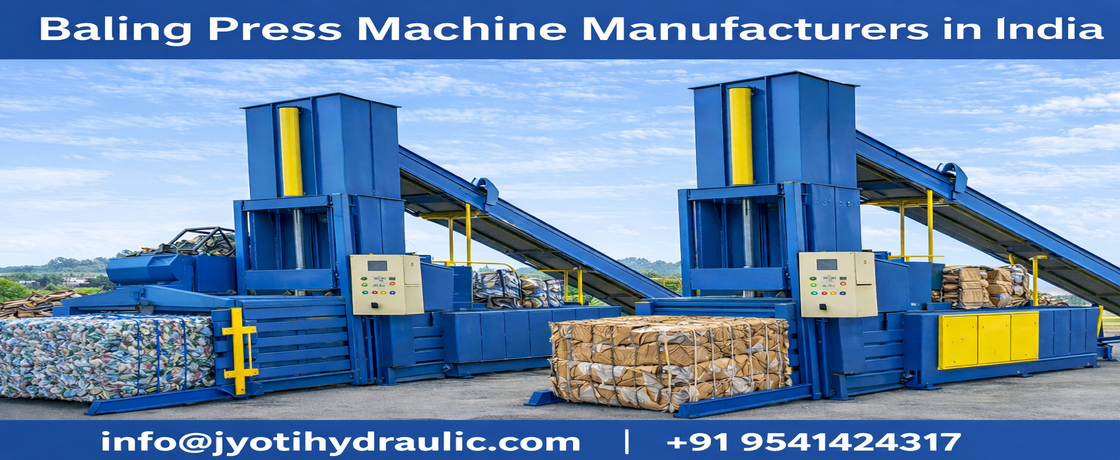
Jyoti Hydraulic is a trusted industrial machinery brand helping businesses manage recyclable waste more efficiently with durable and performance-driven baling solutions. In 2026, waste handling is no longer only about cleanliness; it is directly linked to storage cost, transport efficiency, recycling value, workplace safety, and environmental responsibility. A Manual Waste Baling Machine is one of the most practical investments for companies that regularly handle paper waste, corrugated boxes, cartons, plastic packaging, textile scrap, and other recyclable materials.
For small and medium industries, warehouses, retail chains, packaging units, logistics hubs, and recycling businesses, manual balers offer a strong balance between affordability, reliability, and operational control. They do not require complex automation, yet they deliver high compression performance when designed with a robust hydraulic system.
This guide explains the working, applications, technical factors, benefits, selection tips, and future trends of manual waste baling machines to help buyers make an informed decision in 2026.
Industry Overview: Why Manual Baling Machines Matter in 2026
India’s industrial and commercial sectors are producing increasing volumes of packaging waste every year. E-commerce, FMCG, manufacturing, printing, logistics, supermarkets, and export businesses generate large quantities of cardboard, paper, and carton scrap daily. Without proper compaction, this waste occupies valuable floor space, increases transportation frequency, creates fire hazards, and reduces resale value.
This is why demand for equipment such as the Waste Paper Corrugated Box Baling Press Machine is growing across industries. Businesses are now looking for organized waste management systems that convert loose scrap into compact, stackable, and transport-friendly bales.
A reliable Carton Baling Machines Manufacturer in India understands local working conditions, material types, power availability, maintenance expectations, and industry-specific waste volumes. Similarly, experienced Scrap Baling Machine Manufacturers in India design machines that can withstand continuous industrial use while reducing manual handling effort.
What Is a Manual Waste Baling Machine?
A Manual Waste Baling Machine is a hydraulic press used to compress loose recyclable waste into dense bales. The machine typically includes:
- Heavy-duty steel frame
- Hydraulic cylinder
- Power pack unit
- Compression plate
- Bale chamber
- Door locking system
- Manual tying arrangement
- Control panel
In a manual baler, the operator loads the waste into the chamber, activates the hydraulic press, ties the compressed bale manually, and removes it for storage or dispatch. The process is simple, safe, and cost-effective when the machine is correctly selected.
Technical Insights: How the Machine Works
The working principle is based on hydraulic pressure. When the machine is activated, the hydraulic pump moves oil into the cylinder. The cylinder pushes the compression plate downward or forward, depending on the machine design. This pressure reduces the volume of loose waste and forms a dense bale.
The final bale density depends on:
- Pressing force
- Chamber size
- Material type
- Moisture level
- Compression cycle time
- Number of pressing strokes
- Bale tying quality
For example, corrugated boxes contain air gaps between layers. A good baling press removes these air pockets and converts bulky cartons into compact bales. This improves transport loading and helps recyclers process the material more efficiently.
Key Applications of Manual Waste Baling Machines
Manual balers are widely used in multiple industries because they can handle different recyclable materials.
1. Paper and Corrugated Box Waste
A Waste Paper Corrugated Box Baling Press Machine is ideal for packaging units, warehouses, logistics companies, and printing businesses. It compresses cardboard sheets, used boxes, paper cuttings, and carton waste.
2. Retail and Supermarket Waste
Retail stores receive products in cartons daily. A manual baler helps reduce clutter, improve backroom storage, and prepare cardboard waste for recycling pickup.
3. Recycling and Scrap Trading
Scrap dealers use balers to increase handling efficiency and improve the resale value of compacted material. Dense bales are easier to weigh, store, stack, and transport.
4. Textile and Garment Units
Fabric leftovers, cotton waste, and textile cuttings can be compressed into manageable bundles.
5. Manufacturing Plants
Industries use balers for packaging scrap, plastic film, cardboard, and other production-related recyclable waste.
Benefits of Using a Manual Waste Baling Machine
Reduces Storage Space
Loose cartons and paper waste occupy large areas. Baling can reduce volume significantly, allowing businesses to use floor space more productively.
Lowers Transport Cost
Compact bales allow more material to be loaded in one vehicle. This reduces freight frequency and improves logistics efficiency.
Improves Scrap Value
Recyclers often prefer properly compressed and sorted bales. Clean, dense, and well-tied bales may attract better rates than loose mixed waste.
Enhances Workplace Safety
Unmanaged waste can block pathways, create dust, attract pests, and increase fire risk. Baling keeps waste organized and safer to handle.
Supports Sustainability Goals
Using a baling machine helps companies improve recycling practices and reduce landfill dependency.
Cost-Effective for SMEs
Manual balers are more affordable than semi-automatic or fully automatic models, making them suitable for businesses with moderate waste volumes.
Buying Guide: How to Select the Right Manual Baling Machine
Choosing the right machine requires more than comparing price. Buyers should evaluate technical, operational, and service-related factors.
1. Identify Your Waste Material
Different materials need different pressing forces. Paper and cartons are easier to compress, while plastic bottles, textile waste, or mixed scrap may need higher tonnage.
2. Calculate Daily Waste Volume
Estimate how much waste your business generates per day. A small retail store may need a compact baler, while a packaging unit may require a larger chamber and stronger hydraulic system.
3. Check Pressing Force
Common machine capacities may range from light-duty to heavy-duty hydraulic systems. Higher pressing force creates denser bales but may also increase power requirements.
4. Review Bale Size and Weight
Before buying, check the required bale dimensions. Bale size should match your storage area, handling method, and transport requirements.
5. Inspect Machine Structure
A good baling machine should have a rigid steel body, strong welding, stable base, and durable chamber plates. Weak structure can lead to vibration, frame bending, and frequent breakdowns.
6. Evaluate Hydraulic Components
The hydraulic cylinder, pump, valves, seals, and hoses directly affect machine performance. High-quality hydraulic parts reduce leakage, downtime, and maintenance cost.
7. Consider Operator Safety
Look for safety features such as emergency stop, secure door lock, pressure control, overload protection, and safe bale removal design.
8. Choose the Right Manufacturer
Working with experienced Baling Press Machine Manufacturers ensures proper machine selection, installation guidance, spare parts support, and long-term service reliability.
Why Manufacturer Expertise Is Important
A baling machine is not a general-purpose product. The right design depends on waste type, required bale density, available space, power supply, and operating frequency. A professional Carton Baling Machines Manufacturer in India can suggest the right chamber size, motor capacity, pressing force, and machine layout.
Reliable Scrap Baling Machine Manufacturers in India also provide practical support for installation, operator training, maintenance planning, and troubleshooting. This reduces downtime and improves return on investment.
Future Trends in Baling Machines
In 2026 and beyond, waste baling technology is moving toward better efficiency, safety, and sustainability. Important trends include:
- Energy-efficient hydraulic systems
- Compact machine designs for limited spaces
- Better safety interlocks
- Low-maintenance power packs
- Custom bale sizes for industry-specific needs
- Semi-automatic upgrades for growing businesses
- Improved sealing systems to reduce hydraulic oil leakage
Manual balers will remain popular because they are affordable, simple to operate, and practical for Indian industries with medium waste loads.
Conclusion
A Manual Waste Baling Machine is a smart investment for businesses that want to reduce waste volume, improve recycling value, cut transportation costs, and maintain a cleaner workspace. Whether you handle cartons, corrugated boxes, paper scrap, packaging waste, textile waste, or recyclable industrial material, the right baler can improve both operational efficiency and profitability.
Before buying, evaluate your waste type, daily volume, bale size, pressing force, hydraulic quality, machine structure, safety features, and manufacturer support. Choosing trusted Baling Press Machine Manufacturers ensures long-term performance and better value.
For companies searching for a reliable Waste Paper Corrugated Box Baling Press Machine, Carton Baling Machines Manufacturer in India, or experienced Scrap Baling Machine Manufacturers in India, Jyoti Hydraulic offers industry-focused solutions designed for practical performance.
FAQs
1. What is a manual waste baling machine used for?
It is used to compress recyclable waste such as paper, cartons, corrugated boxes, plastic packaging, textile scrap, and other loose materials into compact bales.
2. Is a manual baler suitable for small businesses?
Yes. Manual balers are ideal for small and medium businesses because they are affordable, easy to operate, and require lower maintenance compared to automatic machines.
3. Which industries use carton baling machines?
Carton baling machines are used in warehouses, logistics hubs, supermarkets, packaging units, printing companies, recycling centers, and manufacturing plants.
4. How does a baling machine reduce cost?
It reduces storage space, lowers transportation frequency, improves scrap handling, and may increase the resale value of recyclable waste.
5. What should I check before buying a baling press machine?
Check material type, daily waste volume, pressing force, bale size, hydraulic quality, safety features, machine body strength, and after-sales support.
6. Why choose an Indian baling machine manufacturer?
An Indian manufacturer understands local industrial needs, provides faster service, offers spare parts support, and can customize machines according to business requirements.
Get Expert Consultation from Jyoti Hydraulic
Need the right manual waste baling machine for your business?
Contact Jyoti Hydraulic today to discuss your waste material, required capacity, bale size, and budget. Get expert consultation, customized recommendations, and a competitive quotation.
📧 info@jyotihydraulic.com
📞 +91 9541424317


