
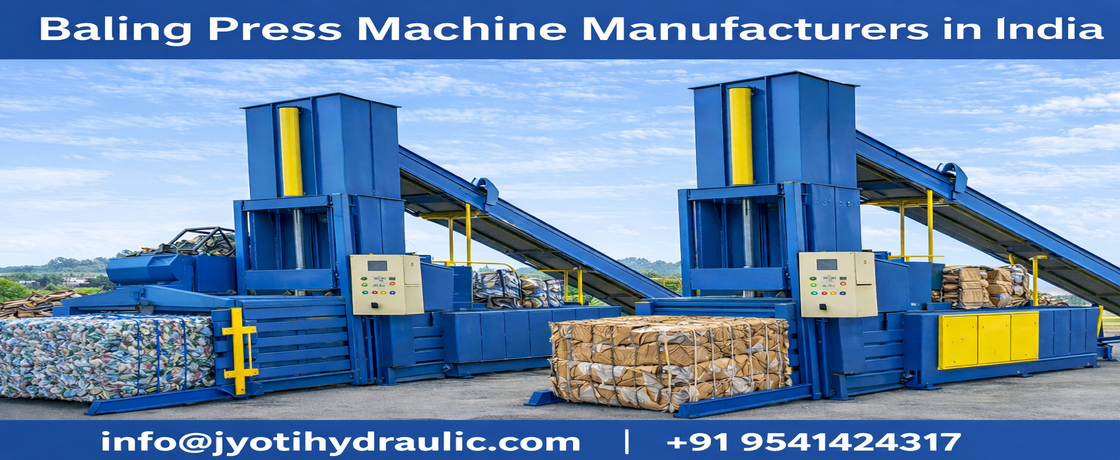
Jyoti Hydraulic provides advanced hydraulic scrap baling solutions for industries that need faster, cleaner, and more profitable scrap handling. In today’s competitive recycling and manufacturing environment, loose metal waste is not just a storage problem—it directly affects transport cost, workplace safety, productivity, and resale value. That is why many businesses search for trusted Scrap Baling Machine Manufacturers in India before investing in a machine.
A scrap baling press machine converts bulky metal waste into compact, high-density bales. These bales are easier to stack, load, move, sell, and recycle. Whether you manage iron scrap, steel cuttings, aluminum waste, automobile scrap, or fabrication leftovers, the right baling machine can make your operations more organized and cost-efficient.
Scrap Recycling Industry Overview
India’s recycling sector is growing quickly as industries focus on sustainability, cost control, and better material recovery. Metal scrap has strong reuse value, but only when it is handled properly. Loose scrap occupies large floor space, creates safety risks, and increases loading time.
Recycling yards, steel plants, foundries, fabrication units, and automobile dismantling businesses now prefer hydraulic balers to improve scrap density and reduce logistics expenses. This has increased demand for reliable Iron Scrap Baling Machine Manufacturers in India that can supply heavy-duty machines for continuous industrial use.
What is a Scrap Baling Press Machine?
A scrap baling press machine is a hydraulic machine designed to compress loose metal scrap into compact bundles or bales. It uses powerful hydraulic cylinders to apply pressure inside a strong compression chamber.
It can process materials such as:
- Iron scrap
- Mild steel scrap
- Aluminum scrap
- Copper scrap
- Sheet metal waste
- Tin containers
- Vehicle body scrap
- Industrial metal cuttings
The final bale is easier to store, transport, and feed into recycling or melting processes.
Working Principle & Technical Insights
The machine works on a simple but powerful hydraulic compression system. Scrap is loaded into the chamber, where hydraulic rams press it from one or more directions. Once the required density is achieved, the bale is ejected manually or automatically.
A typical scrap baler includes:
- Heavy-duty fabricated body
- Hydraulic cylinders
- Power pack
- Electric motor
- Control panel
- Bale ejection system
- Safety switches
- Oil cooling arrangement
For example, a fabrication unit generating irregular steel offcuts can use a baling press to convert scattered scrap into uniform bales. This reduces handling time, improves loading efficiency, and keeps the workshop cleaner.
Types of Scrap Baling Machines
1. Vertical Scrap Baling Machine
A vertical baler is suitable for small and medium operations. It requires less floor space and is simple to operate.
2. Horizontal Scrap Baling Machine
Horizontal balers are preferred for high-volume scrap processing. They offer faster output and can be integrated with conveyors or grab feeding systems.
3. Triple Compression Scrap Baler
This machine compresses scrap from three sides, producing dense and uniform bales. It is ideal for iron and steel scrap recycling.
4. Fully Automatic Scrap Baling Machine
Automatic balers reduce manual effort and improve productivity. These machines are useful for recycling plants, steel units, and large scrap yards.
Industrial Applications
Scrap baling machines are used across many industries, including:
- Steel plants
- Foundries
- Automobile recycling units
- Sheet metal industries
- Fabrication workshops
- Ship breaking yards
- Railway workshops
- Recycling centers
In an automobile scrap yard, for instance, body panels, metal frames, and mixed steel waste can be compressed into compact bales. This makes transportation easier and improves scrap resale handling.
Key Benefits of Using Scrap Baling Press Machines
Reduced Storage Space
Compressed bales occupy much less space compared to loose scrap.
Lower Transport Cost
Dense bales allow more scrap to be loaded in one vehicle, reducing trip frequency.
Better Scrap Handling
Uniform bales are easier to lift, stack, weigh, and dispatch.
Higher Productivity
Automated or semi-automatic machines reduce manual labor and speed up operations.
Improved Safety
Organized scrap reduces sharp-edge hazards and workplace clutter.
Better Recycling Value
Properly compressed scrap is often preferred by buyers because it is easier to process.
Buying Guide – How to Choose the Right Machine Supplier
Choosing the right supplier is as important as choosing the machine itself. A dependable manufacturer should understand your scrap type, daily volume, available space, power conditions, and bale size requirements.
Before selecting from different Baling Press Machine Manufactures, check:
- Manufacturing experience
- Machine design quality
- Hydraulic system strength
- Customization options
- Service support
- Spare parts availability
- Installation assistance
- Operator training
A low-cost machine may seem attractive, but poor build quality can lead to frequent breakdowns, oil leakage, low bale density, and production loss.
Important Features to Check Before Purchase
Before buying a scrap baler, inspect these features carefully:
- Hydraulic pressure capacity
- Chamber size
- Bale size output
- Motor power
- Cycle time
- Control system
- Body thickness
- Oil cooling system
- Safety locking system
- Maintenance access
For high-volume iron scrap, buyers should prefer rugged construction, strong cylinders, and efficient hydraulic power packs. This is why many businesses look for experienced Iron Scrap Baling Machine Manufacturers in India instead of general machinery suppliers.
Maintenance & Safety Tips
Regular maintenance keeps the machine efficient and safe.
Maintenance Tips
- Check hydraulic oil level regularly
- Inspect hoses, seals, and fittings
- Clean the baling chamber
- Lubricate moving parts
- Monitor abnormal noise or vibration
- Replace damaged components on time
- Keep the control panel dust-free
Safety Tips
- Train operators before use
- Do not overload the chamber
- Keep hands away from moving parts
- Use emergency stop when needed
- Wear gloves, shoes, and eye protection
- Follow manufacturer instructions
Good maintenance reduces downtime and increases machine life.
Future Trends in Scrap Recycling & Baling Technology
Scrap handling is becoming more advanced with automation and smart monitoring. Future-ready machines may include PLC controls, energy-efficient hydraulic systems, remote monitoring, automatic fault alerts, and improved safety sensors.
Industries are also demanding machines that consume less power while delivering higher bale density. As recycling becomes more organized in India, demand for quality Scrap Baling Machine Manufacturers in India will continue to grow.
Conclusion
A scrap baling press machine is a practical investment for industries that want to reduce scrap volume, improve workplace organization, lower transport costs, and increase recycling efficiency. From small workshops to large recycling plants, the right hydraulic baler can deliver measurable operational benefits.
When choosing a supplier, focus on quality, hydraulic performance, customization, after-sales service, and long-term reliability. A well-built machine not only handles scrap efficiently but also improves profitability over time.
FAQs
1. What is a scrap baling press machine?
It is a hydraulic machine used to compress loose metal scrap into compact bales for easy storage, transport, and recycling.
2. Which scrap materials can be baled?
Iron, steel, aluminum, copper, sheet metal, tin, and automobile scrap can be compressed.
3. Which machine is best for iron scrap?
A heavy-duty hydraulic baler or triple compression baler is suitable for iron scrap.
4. Why should I buy from a manufacturer instead of a trader?
Manufacturers offer better customization, technical support, spare parts, and service reliability.
5. Does a scrap baling machine save transport cost?
Yes. Compact bales allow more scrap to be loaded per trip, reducing transport expenses.
6. How often should maintenance be done?
Basic checks should be done daily, while detailed inspection should be scheduled periodically based on usage.
Contact Jyoti Hydraulic for Machine Consultation
Need expert help selecting the right scrap baling press machine?
Contact Jyoti Hydraulic today for technical guidance, customized machine consultation, and a quotation.
📧 info@jyotihydraulic.com
📞 +91 9541424317


